NYSDEC
Division of Water
A Primer on Aquatic Plant Management
in New York State
April 2005
- DRAFT -
Table of Contents
Getting the Most (Out) Of Your Aquatic Plants
A rose by any other name is still a rose. But for plants residing under water or along the fringes of streams, ponds, and lakes, a name implies much more. For frightened young fish, it means shelter from predator peril. For frogs and backswimmers, it means floats for life and leisure. And for minnows, moose, and mollusks, it means food, from the smallest alga to the soggiest lily.
For a frustrated lake resident, aquatic plants may all be called seaweeds, while a scientist may call them macrophytes (rooted aquatic plants) and extol their virtues. Still others hold each name in shrouded reverence, marveling at the gentle swell of the purple bladderwort or the primitive majesty of the horsetail. Yet although each person may view the plant kingdom with unequal parts idolatry and contempt, all those who spend time around lakes share a core set of reasons for understanding aquatic plants.
Aquatic Plants- Where Do They Belong?
This chapter mainly focuses on the control strategies that have been used to minimize the impacts of invasive plants on lake uses. The term “minimize” is appropriate, for invasive plants, particularly non-native plants, can rarely if ever be eradicated from lake systems. Since plants will grow where light reaches the lake floor, and since most of these plants have reproductive structures- seeds, roots, rhizomes, etc.- that cannot be fully exterminated, the goal of most management plans is to minimize invasive plant populations and/or the impacts associated with nuisance growths of these plants.
Before tackling the problem of over abundance, it is important to understand that aquatic plants play an absolutely essential role in the maintenance of a healthy lake ecosystem. Lakes devoid of aquatic plants not only look a bit like swimming pools- they behave the same way. They only support very limited functional uses associated with contact recreation, and may not even support potable water usage, since aquatic plants frequently filter pollutants out of the water. While recreationally pleasing, plant-less lakes are aesthetically rather vanilla.
The larger rooted plants that inhabit lakes are referred to as macrophytes, although there are macroalgae that can at least superficially resemble these rooted plants. Macrophytes are really better described as either bryophytes (primarily mosses and liverworts) and vascular plants, which transport nutrients and water to their stems. They resemble the plants that grow on land since they usually have roots, stems, leaves, flowers and seeds, although there are exceptions. A few species of macrophytes found in New York that lack true roots are coontail (Ceratophyllum spp.) and bladderwort (Utricularia spp.). This is one means to distinguish macrophytes; others include growing season (spring plants versus summer plants) and method of reproduction (seed producers versus tuber producers). However, the most common method for distinguishing macrophytes is by their location in the lake.
Emergent plants grow out of the water at the water's edge, in the boundary between dry land or wetlands and the open water littoral zone of lakes, although they are actually part of the littoral zone. They are rooted within the water and have stems and leaves above the water, and grow in water less than 1-2 feet deep. The robust root and stem structures in these plants befit the only plants that can survive the harsh conditions found within this area- highly variable water level, dessication, and sediment scouring from ice and erosion. There are a large number of emergent plant species found throughout New York State, with grasses, sedges and rushes the most abundant, although cattails and exotic emergent plants such as purple loosestrife and phragmites are perhaps the most prominent. The latter are considered invasive plants, although their impacts are more related to ecological diversity and function than to human use impairment.
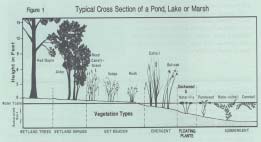
Just beyond the emergent plants, floating-leaf plants, such as water lilies, watershield, and more delicate unrooted plants such as duckweed and watermeal, are found. Like emergent plants, they are rooted under the water (sometimes with thick, hearty rootstocks (rhizomes)), but the floating leaves usually constitute the bulk of the plant mass. These floating leaves shield out the light transmitted below the plant, reducing the amount of underwater plant growth (within the stems of the floating leaf plants as well as other low-lying plants). These plants grow in water from a few inches deep (the duckweed and watermeal, which look like surface algae from a distance) to as much as 6-8 feet deep. Although floating-leaf plants tend to grow in the most heavily used parts of lakes and ponds, they are usually not associated with nuisance conditions.
Beyond this area occur submersed plants such as pondweeds and milfoil. These are perhaps the most diverse of the aquatic plants, ranging from tiny grass-like plants that barely peek above the sediment layer, well-hidden in up to 20 feet of water, to very tall, very conspicuous leafy plants that look a little like redwoods when viewed from the lake bottom. Some of these plants sprout a floating leaf or rosetta of leaves, and even a spike of flowers above the surface, although the bulk of the plant still resides under the water surface. Others grow to the lake surface and then spread laterally, forming a dense canopy that ultimately prevents other plants from growing under their shade. These observations reinforce the notion that the definitions of submersed and floating-leaf are somewhat arbitrary, for several plants could easily be considered as members of both groups, and plants in both groups still take up residence in the littoral zone. Several submergent plant species are regularly associated with nuisance conditions, owing to their status as exotic plants.
The presence of aquatic plants in lake environments can be summarized in a single statement:
“If light reaches the bottom, plants will grow.”
Of course, it is not as simple as that. Aquatic plant populations are governed by a complex interaction of physical, chemical, and biological factors. These vary from lake to lake, one part of a lake to another and one time of year to another. While limnologists and knowledgeable lakefront residents recognize that the equation “ phosphorus + lake = algae” holds in most parts of the state, the equation dictating the growth of aquatic plants is much more complex, and may not even exist. The Grand Unification Theory of Aquatic Plants in NYS Lakes continues to be elusive. The existing base of knowledge does not explain why some plants do well in many New York State lakes. We have a pretty good idea about which factors contribute to the spread of aquatic plants in a lake (sediment type, light transmission, water and sediment chemistry, space, the introduction or presence of invasive plants, etc.). And since light can and should be shed on lakes and ponds, and since the entire ecological web is critically dependent on photosynthesizing organisms native to these lakes and ponds, it follows that aquatic plants “belong” in lakes. But to what end?
The functions served by aquatic plants are extensive and impressive. They harbor aquatic insects that serve as the foodstuff for fish, often providing a launching pad from the water to the air. They provide hiding, nurseries and spawning areas for zooplankton, amphibians and fish. They provide food for waterfowl and other creatures of the wild. They hold sediment in place and otherwise control flow patterns and dampen wave action, reducing erosion and the transit of turbidity and nutrients into the open waters. They create oxygen for those who live in and above the waterline, aiding in the water purification process (by providing habitat for microbial degradation and converting toxic compounds to useful raw materials). And, at least from an aesthetic standpoint, many of these macrophytes are quite beautiful, whether observed by the colorful flowers of the pickerelweed or water lilies, the delicate but dangerous nets cast by the carnivorous bladderwort, or the fern-like simplicity of the Robbins pondweed. In short, aquatic plants are absolutely essential to the proper maintenance and function of a healthy and attractive lake or pond.
Weed control to improve swimming or aesthetic quality may have undesirable consequences. If some uses of the lake, such as fishing, require moderate to high levels of standing weeds then efforts to reduce weed populations will necessarily be in conflict with these uses. Both anglers and swimmers would certainly agree that too many weeds, particularly monocultures of canopy-forming or surface-covering exotic weeds, are not good for any lake uses. However, user conflicts about “How much is too much?” need to be reconciled before aquatic plant management strategies are to be considered necessary.
What Are Those Things?
An integral part of any management or prevention program is identifying the targeted plants. Why is this important? Isn’t a weed just a weed? Well… while a weed is simply too much of a plant growing in the wrong place, many of the strategies for controlling those nuisance weeds are selectively effective for specific aquatic plants. For example, seed producing plants, such as some varieties of Potamogeton (pondweed) and naiads, are less impacted by water level manipulation, due to the ability of the seed banks to weather the deep freeze associated with winter drawdown. These plants may actually increase after a drawdown, at the expense of some plants that reproduce vegetatively (through fragments or rhizomes). Some beneficial native plants that look very similar to exotic, invasive plants may not survive an aggressive campaign to control the exotics, leaving a barren (under)waterscape for the new colonization and spread of opportunistic plants, like the same exotics targeted in the beginning. Grass carp like the taste or texture of some plants (such as soft ribbon or wide-leafed plants, like eelgrass and many of the native pondweeds), but not others (such as coarser plants like milfoil), and their preferences are often inconsistent and unpredictable. Long-term control of nutrients within the water column, while likely to result in clearer water to better support contact recreation, might allow sediment-anchored aquatic plants to thrive in the absence of light inhibiting algae or weakly rooted plants. Some plants are strongly rooted (such as lilies and hardy watermilfoil plants) and derive the majority of their nutrition from the bottom sediments, while other plants such as coontail and bladderwort are weakly rooted, and absorb nutrients from the surrounding water.
Macrophyte surveys and mapping
The amount and coverage of vegetation, both emergent and submerged, can have a significant affect on the recreational access, quality of fisheries, and overall aesthetic appeal of a lake. Vegetation surveys usually involve some combination of measures or estimates of plant quantities and locations within the lake; this information can go a long way toward a better understanding of the water quality and use impairment in a lake. The full spectrum of aquatic vegetation surveys, from the cadillac to the cart, has been described elsewhere (Bloomfield and Madsen, 1996). The high end version is to lay transect lines (running perpendicular from the shoreline to just beyond the maximum depth of aquatic plant growth) throughout the lake and measure plant densities and population composition (species identification) in quadrants placed in regular intervals along the line. These quadrants can range in size from 0.1 (appx 1 foot by 1 foot) to 1 square meter, and can be frequently evaluated to determine change in plant densities and coverages). At the other end, simple surface maps can be drawn without regard to plant type. However, extensive macrophyte surveys can be extremely expensive, and may require the time and expertise of qualified specialists, including divers. Individual plant species must be positively identified and verified to completely address the relationship between macrophyte communities and lake water quality and use impairment. As noted above, this is commonly done as part of volunteer plant monitoring programs.
The most common survey methods usually involve techniques for collecting plants from the surface, usually using rakes attached to ropes tethered to the shoreline, boat, or wrist of the sampler, or observations of plant communities using diver swimovers or identifications from boats. These rake tosses or observations can occur at various depths in the weediest areas, but are best standardized or reproduced by sampling via the “point-intercept” method, which divides the lake into a series of points, usually in the center of grids overlying the surface of the lake. These points can be sampled randomly, and recent surveys have indicates a strong connection between biomass measurements and semi-quantitative assessments from point-intercept measurements, as discussed below (Lord et al., 2004). The point-intercept measurements can generate coverage maps that provide a readily understandable snapshot of plant conditions in a lake (see Figure on the left), and can, if used in methods described below, can be used as a surrogate for detailed biomass survey maps.
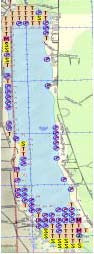
Aquatic Plant Survey Map of Waneta Lake
(Lord, 2005)
In lieu of an extensive macrophyte survey, individuals and lake associations can map the extent of vegetation coverage over the course of the year, usually during late spring to early summer and again in the fall. This can be done through aerial photography, or from on-site inspection by lake residents (preferably those who can view the lake from their rooftops!). The most common maps indicate the major plant species in each part of the lake, with little differentiation between thick beds and scattered plants. These can be seen in the figure on the right.
It is frequently measured as percent coverage, or as a qualitative assessment of density, usually rare/trace, scarce/sparse, moderate/ medium/ common, and dense/abundant. Cornell University researchers have developed simple semi-quantitative metrics to evaluate density using these easily-understood labels applied to the results from two or three rake tosses, as quantified below (Lord et al, 2005):
|
Density Category |
Average Quantityfrom 2-3 Rake Tosses |
Approximate Biomass
|
|
No plants |
Nothing |
0 g/m2 |
|
Trace |
Fingerful (of plants) |
up to 0.1 g/m2 |
|
Sparse |
Handful |
0.1 to 20 g/m2 |
|
Medium |
Rakeful |
20 to 100 g/m2 |
|
Dense |
Can’t Bring In Boat |
100 to 400 g/m2 |
So what’s the problem?
While most lake residents and users recognize the importance of aquatic plants, if grudgingly at times, they also recognize that too many of the wrong type of plants in the wrong place at the wrong time are no longer beneficial aquatic plants. They are WEEDS! While any aquatic plant that meets at least some of these criteria may qualify as a “weed”, most of the aquatic plant problems in New York State lakes are generated from those submergent aquatic plants that are not native (exotic) to a lake (and in most cases to a region or the state as a whole). These plants tend to grow invasively in the absence of natural competitors or predators. Once these invasive populations inhibit the uses of these lakes, these plants become a nuisance and the target of active management.
Aquatic plant management should not be taken lightly! The potential impacts to the aquatic ecology of a lake from a poorly thought-out “brush-fire” response to a weed problem can be significant and difficult to reverse. Likewise, inaction in the face of rapidly escalating weed problems, particularly those triggered by invasive exotic weeds, can also create ecological problems. In short, the future management challenges stemming from poor management decisions can increase exponentially. The best way to prevent these poor decisions is to develop a comprehensive aquatic plant management plan that addresses the objectives of aquatic plant management and reasonable strategies for reaching those objectives for your lake. Appendix A includes an outline for developing such a plan.
The rest of this chapter will largely focus on a summary of the control strategies that have been used to minimize the impacts of invasive plants on lake uses. The term “minimize” is appropriate, for invasive plants, particularly non-native plants, can rarely if ever be eradicated from lake systems. Since plants will grow if light reaches the lake floor, and since most of these plants have reproductive structures- seeds, roots, rhizomes, etc.- that cannot be fully exterminated, the goal of most management plans is to minimize invasive plant populations and/or the impacts associated with nuisance growths of these plants.
It should also be noted that one swimmer’s weed is another angler’s edge. Weed control to improve swimming or aesthetic quality may have an undesirable impact on fishing. If some uses of the lake require moderate to high levels of standing weeds, such as fishing, then aquatic plant management activities implemented to reduce weed populations will necessarily be in conflict with these uses. While both anglers and swimmers would certainly agree that too many weeds, particularly monocultures of canopy-forming or surface-covering exotic weeds, are not good for any lake uses, user conflicts about “how much is too much” need to be reconciled before aquatic plant management strategies are to be considered necessary.
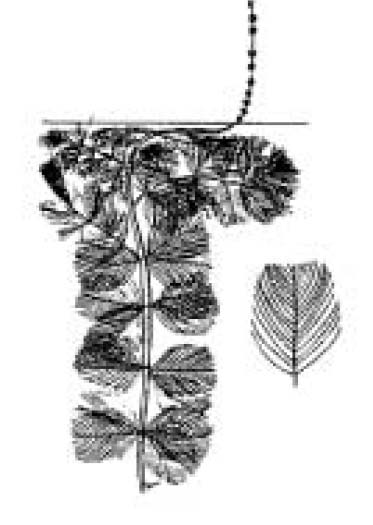
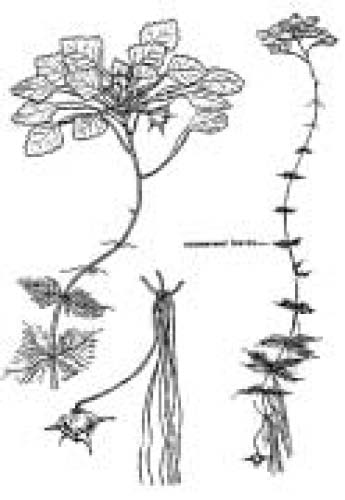
Although New York State lakes continue to be threatened by a growing number of invading plants from neighboring states (practically next door as the crow flies, or in this case the duck…), states from the not-too-distant south where longer growing seasons and access to tropical travelers breeds a larger mix of aquatic invaders, and even boats traveling through international gateways into the state, only a small number of exotic plant species can be indicted for the majority of invasive plant problems in these lakes. The worst invaders in New York State waterways can be summarized in an invasive aquatics Most Wanted List (line drawings from Crowe and Hellquist, 2000):
- 1. Eurasian watermilfoil (Myriophyllum spicatum) was introduced into New York State in the 1940s, probably in the Finger Lakes region, and has since spread to every region of the state except for Long Island. It is characterized by dense canopies that spread laterally across the surface of the lake, and propagates primarily by fragmentation in pieces as small as one inch. Like most invasive exotic plants, it grows opportunistically in a wide variety of depths, water quality conditions, and sediment types, although it is mostly commonly found in sandy to mucky soils in a depth range of 3 to 12 feet. It is the most invasive submergent aquatic plant throughout New York State.
- 2. (Eurasian) water chestnut (Trapa natans) was introduced in North American and New York State in Collins Lake in Scotia in 1882, although it was found a few years earlier in an herbarium in Massachusetts. From this “epicenter”, it has largely migrated along the Lake Champlain, Mohawk River and Hudson River systems (and problems associated with water chestnut are mostly restricted to these areas), although it has been increasingly found in small lakes and ponds. It is conspicuous for a surface rosetta of leaves and a woody, spiked nutlet that serves as a seed for future generations of the plant (and is viable in bottom sediments for several decades). Water chestnut grows primarily in sluggish shallow water in mucky sediments.
- 3. Curly-leafed pondweed (Potamogeton crispus) was probably introduced in the mid-1800s in the northeastern United States, and is found sporadically throughout the state. It is characterized by a lasagna-like curled leaf and a very early growing season. In New York lakes, the plants usually start growing under the ice and die back by late June. It spreads by seeds and sprigs. It grows in a variety of settings, but generally grows best in relatively shallow water. Curly-leafed pondweed control strategies are most often employed in the eastern and southern portions of the state.
- 4. Fanwort (Cabomba caroliniana) is native to the southern states but not native to New York State or the northeastern states. It has historically been limited to Long Island (although the first sightings in New York State may have occurred in Orange County in the early 1930s), where it grows primarily in shallow water, as in most other New England states. However, in recent years it has been found in deepwaters of the isolated lakes in the southeastern Adirondacks and on both sides of the Lower Hudson River basin. It has thread-like leaves that fan out on opposite sides of the stem; while it has white or pink flowers, these rarely appear in fanwort in New York state lakes. It spreads by seeds, not by fragmentation or other asexual means. Fanwort control is mostly limited to Long Island.
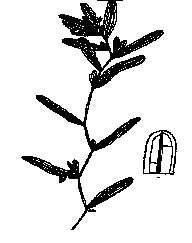
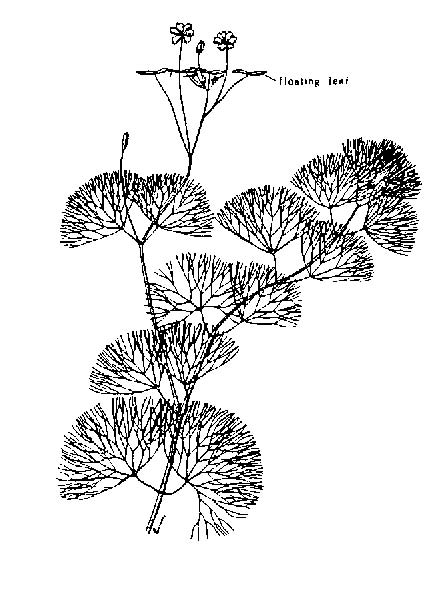
Problems with nuisance weeds vary from one part of the state to another, resulting in management approaches and regulatory issues that are also highly variable. Although Eurasian watermilfoil has recently spread to the interior Adirondacks, the mostly isolated lakes and ponds away from the perimetry of (and major travel corridors within) the Adirondack Park, as well as the unaffected ponds in Long Island, have largely been spared nuisance-level infestations of most aquatic plants. While fanwort is common and grows invasively in many Long Island lakes and ponds, most of the ponds are so shallow that invasive plant growth also occurs with many native plant species. The percentage of lakes in the interior Adirondacks for which some recreational uses are impacted by excessive weed growth is much smaller than in most other parts of the state, at least relative to the large number of lakes in that region. The incidences of weed problems are highest in the Central New York region, although it is also clear that this also reflects a higher percentage of lakes reporting these problems (due to active lake associations, strong local involvement in lake residents in state and county reporting mechanisms, and active monitoring programs).
|
Lake Region |
% NYS Lakes in Region |
% NYS Lakes With Exotic Plants+ |
% NYS Lakes Impacted By Weeds* |
|
Long Island / NYC |
5 |
5 |
10 |
|
Downstate |
18 |
15 |
20 |
|
Central New York |
12 |
40 |
30 |
|
Adirondacks |
58 |
20 |
20 |
|
Finger Lakes |
5 |
10 |
10 |
|
Western New York |
2 |
10 |
10 |
+ - based on inventories compiled through 2004
* - as documented on the NYS Priority Waterbody Lists compiled in the late 1990s to early 2000s
In other regions of the state, nuisance weed problems tend to be focused on more heavily used lakes near large roadways, although this is probably due to a combination of the greater exposure to vectors for transmitting these exotic plants (boats and trailers), the ease of access to these lakes, the larger population base using these lakes, and the greater likelihood of local communities reporting invasive weed problems in these high profile lakes.
An Ounce of Prevention
The best control strategy for nuisance aquatic plants is prevention. If the plant isn’t in your lake, there is no need to control it. While preaching prevention in a weed-infested lake might be akin to closing the barn door after the horses have escaped, it might be the best way to keep the rest of the horses in the barn.
So what are the best measures for preventing the transit and spread of nuisance aquatic plants? New introductions of plants are often found near public access sites and heavily used entryways. Therefore, lake residents should focus their attention on boat propellers and trailers. Propellers, hitches, and trailers frequently get entangled by weeds and weed fragments. Boats not cleaned of fragments after leaving a colonized lake may introduce plant fragments to another location. Additionally, not feeding the ducks is a good idea, since plant fragments and seeds frequently enter lakes on the feet and wings of these feathered visitors. Vigilantly patrolling all waterways entering the lake for plant fragments, seeds, and other bits of plant stuff may help, although neither strategy is likely to keep out most of the hitchhikers.
Inspection programs are a useful strategy and have been introduced at boat launch sites in several locations in the state. These can range from providing handouts and information to boaters about the connection between boats and invasive exotic plants to encouraging the removal of stray plants from propellers and trailers to preventing infected boats from entering the lake until offending plants are removed. The most common inspection programs are self-inspections suggested by “hitchhiker” signs posted at public and private launches by the NYSDEC and advocacy groups.
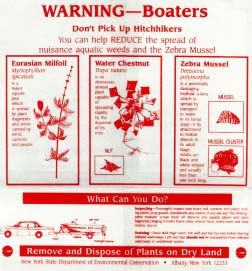
These frequently provide pictures of the most significant invaders (water chestnuts, zebra mussels, and sometime Eurasian watermilfoil), the places on boat props and trailers where straggling plants grab, and some simple strategies for removing these plants. Several lake communities sponsor “weed watcher” programs that teach volunteers how to look out for exotic plants. At the other extreme, boat wash stations (ranging from simple hoses to pressurized hot washes) have been used primarily at private launches to remove both nuisance plants and zebra mussel veligers (and any other exotic organisms that hitchhike onto boats or in bilge water).
Plants should not be discarded or introduced from one water source to another. For example, bilge or bait bucket water may contain traces of exotic plants or animals, and should be emptied prior to introduction into a new lake.
Another common mode of infestation is the purchased and deliberate introduction by aquaria and gardening hobbyists. Many problem exotic plant species can be readily purchased for fish tanks or water gardens. At present, only the planting or transit of water chestnut plants and seeds is prohibited within the state. Without stricter federal or state laws that ban or restrict the sale of highly invasive exotic plants in New York State, prevention rests with informing aquaria owners of the risks of discarding aquaria waters into lakes (not to mention the exotic fish or diseases that can also be introduced through this vector).
Exotic plants tend to thrive where water quality conditions and especially sediment characteristics have significantly changed. Establishing no-wake zones can reduce shoreline erosion and local turbidity, and may help to reduce disturbance of bottom sediments.
Who’s In Charge?
Perhaps in recognition of the regional variability in environmental sensitivity in general and aquatic plant problems specifically, regulatory structures within New York State play an important role in aquatic plant management. Chapter 11 discusses the interaction of state law and lake management with a focus on the regulatory authority that directs the various functions of government agencies, but these can be discussed here in greater detail as they relate to aquatic weeds.
In most parts of the state, the New York State Department of Environmental Conservation (NYSDEC) maintains responsibility for regulating aquatic plant management. Most of the plant management strategies discussed in this chapter are not regulated activities. Permits are not required for managing aquatic plant problems, particularly by an individual landowner. A notable exception to this is if all or any portion of a lake is classified (under Article 24 of the Environmental Conservation Law) as a wetland. In this case, some activities are regulated and thus require at least a permit; some also require environmental assessments and evaluations of potential environmental impact. The NYSDEC regional offices can assist lakefront property owners or lake associations in determining if any portion of their lake is a classified wetland. In addition, the bottom of many New York State lakes is owned by the state of New York. Regulations associated with plant management activities that may significantly impact the lake bottom are administered by the Office of General Services.
Case Study- Preventative Measures
Lake Setting: Otsego Lake is a 4100 acre lake found in the Leatherstocking (Central) region of New York state, perched at the northern end of the Village of Cooperstown.
The Problem: Lake residents and user groups have become increasingly concerned about the introduction of invasive exotic organisms through public boat launches and other entry points to the lake
Response: The Otsego Lake Association (OLA), the SUNY Oneonta Biological Field Station (BFS) on Otsego Lake, the Otsego County Conservation Association, Otsego 2000 (a local planning group interested in local quality of life issues) and other local partners worked with the neighboring towns to initiate a voluntary boat inspection and boat wash program, initially to address concerns about zebra mussels. By 2003, the Village of Cooperstown passed a local law requiring these inspections. More than $13,000 in foundation grants and town resources were provided via the Cooperstown Town Board to purchase, install, and staff a boat wash station, resulting in morthan 1600 boat and trailer inspections in 2003 and about 1400inspections in 2004 (about half of which occurred on weekends). Launch fees ($10 per launch, with reduced rates for multiple launches), grants and other contributions offset the approximate cost of $35,000 to run and maintain the launch. Boaters failinspection are directed to a free boat wash at the Village
Highway
While this program was devised for zebra mussel contsame partners were also involved in a water chestnut management and prevention program. A single specimen was discovered during a field survey conducted by a SUNY Onstudent in 1999. $7,000 was provided by Otsego 2000 for searching for and removing small populations of water chestnuts. The OLA and BFS sponsor an Exotic Species Day each year for citizens to search for exotics. The BFS providesinformation sheet (regarding the search and removal of exotic plants) and solicits community volunteers for annual monitoring, capped by a barbque and social gathering for the volunteers. The BFS also
boat launches each spring.
The OLA and BFS are working with the town of Springfield (north end of the lake) to expand beyond an inspection program (and limiting launching to town residents) to site a wash statioThey are also working with local bass associations and yacht clubs to mandate boat
the lake, respectively.
Results: Initial reports indicate that boaters strongly supported the boat and trailer inspections and a Chlorox spray of lines andbilges, although several boats required power washing prior to launching. As a result, as of 2004, no zebra mussels were founin the lake or on boats pulled at the end of the season. Aquatic plant surveys conducted by SUNY Oneonta found two additional water chestnut specim
har
Lessons Learned: This example shows that rapid response to threats of exotic invasions (or actual pioneering introductions) can be effective in slowing or delaying the spread of invasives and the ec
invasion
Source: Otsego Lake Associa tion website (www.otsegolake
p
The Adirondack Park Agency also maintains regulating authority on waterbodies within the Adirondack Park, primarily under their wetland regulations (which differ from state and federal wetland definitions). In other parts of the state, different government entities have authority over some aquatic plant management activities. For example, the authorities that regulate water level in the state (the Canal Authority within the State Thruway Authority, the Hudson River-Black River Regulating District, etc.) may dictate whether water level can be varied within the feeders to the canals or larger river systems. This authority extends to control of water level in many New York State lakes. Other government agencies that possess regulating authority that may ultimately require permits for aquatic plant management include the US Army Corps of Engineers, the NYS Department of State (for “wetland” lakes with direct connections to designated coastal areas), Lake George Park Commission, the Saratoga Lake Protection and Improvement District, the NYS Office of Parks, Recreation, and Historic Preservation (for those lakes and ponds that have both private ownership and state park land), and local government agencies delegated responsibilities by NYSDEC for regulating wetlands.
While aquatic plant management permit applications- primarily for aquatic herbicides and herbivorous fish (grass carp)- are evaluated on a case-by-case basis, and while regulatory requirements and environmental constraints dictate some variations in application reviews, regional patterns have emerged. For example, although aquatic herbicides can be used within the Adirondack Park, at present aquatic herbicides have not been applied to any lakes within the Park. Aquatic herbicide use is also very limited on Long Island. It is perhaps not coincidental that these regions have had lower incidences of aquatic plant problems, at least historically (particularly in the interior Adirondacks). However, both regions appear to have a stronger level of opposition to the use of herbicides than in most other regions of the state. The stronger regulatory framework for protecting wetlands also appears to result in fewer herbicide and grass carp permits in the Adirondacks; grass carp are most frequently stocked on Long Island lakes. On the other hand, a very large number of aquatic herbicide and grass carp permits are issued in the Downstate region, although this is also due in part to the large number of weed infested lakes and the large population base affected by excessive weed growth. In most other regions of the state, the proclivity toward issuing permits for aquatic herbicides and grass carp is neither high nor low. However, greater restrictions exist in some regions. This includes the larger number of wetland lakes in the eastern portion of the Central NY region, the relatively short retention-time (wide river) lakes in the southwestern Adirondacks, and water supply reservoirs throughout the state.
What Works?
Weed problems have plagued New York State for many years. Despite the long history of successes and failures for each of the management strategies to be discussed below, weed management in New York State has offered no single fix for each kind of lake, each kind of nuisance weed, or every lakefront owner with a vague mix of “seaweeds” outside their docks.
There also remains, perhaps hidden under the surface, the great risk of making a problem worse. Each management strategy has some risks associated with their use in these dynamic, unpredictable biological settings. Where possible, these oft-unexpected consequences are anticipated in this chapter, and discussed within the “Disadvantages” portion of the method summary.
That said, there is a core group of aquatic plant management strategies that have a relatively long history of use in New York State lakes and thus a record of success or failure. These can be categorized by cost or permitting requirements, although plant management strategies are usually characterized by mode of action:
Mode of Action:
- • physical control strategies that impact the physical growth patterns of the weeds through disturbing the sediment, altering light transmission through the water or to the plants, and water level manipulation.
- • mechanical control strategies that remove the plants and root systems, such as cutting, harvesting, and rotovating
- • chemical control strategies, such as herbicides
- • biological control strategies, such as herbivorous fish and insects
However, perhaps the most appropriate way to differentiate plant management strategies is by whether the control is “local”- outside a dock or otherwise manageable by an individual lakefront owner- or “lakewide”- strategies that impact most or all of a lake and therefore require a greater consensus among lake residents. While some of the local management activities can be applied in large portions or the entirety of a lake, the logistic difficulties in expanding these activities to a larger area are usually insurmountable.
The techniques listed below are not specifically endorsed by NYSFOLA or regulatory agencies. Rather, this is a list of recognized methods for addressing specific aquatic plant problems. Because prices vary with place, time and circumstance, the cost listings are relative at the time of printing. Additional information about each of these techniques can be explored from a variety of sources (Holdren et al., 2001; Cooke et al., 1993; Baker et al., 1993). Case studies on the use of some of these techniques in New York State lakes are also reported. It must be stated that these do not necessarily represent the normal or expected results from the use of these techniques, although these summary case studies are among the better documented cases in New York State. These summaries are intended to provide the reader with some information about the actual use of these techniques in a wide range of lakes throughout the state, but do not constitute an endorsement of the use of these techniques in any New York State lake. For example, while there have been lake management projects in New York lakes involving the use of stocked aquatic weevils and different herbicides, the documentation in the lake studies reported here is more detailed than in these other projects. The authors hope that additional information about the use of these aquatic plant management techniques in New York State will be collected and become available to those interested in utilizing or learning more about aquatic plant management within the state.
Local / Shoreline Management Activities
(listed by increasing order of “complexity”)
- 1. Hand Harvesting and Suction Harvesting
- • Principle
This is very much akin to weeding your garden. Hand harvesting involves grasping the plant material as close to the sediment layer as possible, even digging into the sediment to grab the root crown, and pulling the intact plant out of the bottom sediment. Plants are pulled slowly to minimize fragmentation, and the entire root system should be removed from the sediment if possible.
If hand harvesting is carried out by a lake resident trying to keep his own shorefront free from plants, plants and roots should be deposited away from the shore to minimize transit back to the lake. This technique is largely restricted to small areas, although only the time, patience and amount of elbow grease prevents a lake resident from keeping a very large area clear. Generally, for large beds of plants, or for plants growing in water greater than a few feet deep (invasive exotics like Eurasian watermilfoil can grow in water up to 20 feet deep), scuba divers will likely be required. In these cases, harvested plant materials, including root systems, stems, leaves, and fruiting structures, are placed in mesh bags and taken away from the lake.
In more extensive diver-operated hand harvesting, a barge on the lake surface with a dredge hose connected to an industrial engine creates suction. The other end of the dredge hose is carried to the lake bottom by a scuba diver. The hose sucks up the plants, roots and top sediments that go into a spoils collection basket on the barge. The basket traps the plants and root fragments, allowing the sediments and water to drain back into the lake. This process is usually referred to as suction harvesting or diver dredging.
Collected plants can be disposed of at a site away from the lake, or dewatered or dried and used for mulch or fertilizers. Disposal may be confined to small, individual sites, in the case of small dredging operations. Suction harvesting collects a much smaller biomass than does larger-scale mechanical harvesting operations (discussed later), because only small targeted areas are dredged, and because only the nuisance plants are removed, not all of the native and exotic plants.
- • Target Plants and Non-Target Plants
Hand-harvesting is the ultimate selective plant management technique, since it removes individual plants a single plant at a time. Only those plants that are identified as exotic, invasive, or otherwise contributing to nuisance conditions are removed. Suction harvesting may also remove some nearby plants and sediment, although selective control is still largely achievable.
- • Advantages
Unlike large scale, lake-wide management techniques, hand harvesting can be conducted on a single plant or a small bed at a minimal expense, if not minimal labor. Anyone can hand-harvest, although only the cautious can hand-harvest well. It targets only those plants that create use impairments or contribute to nuisance conditions. If properly performed (SLOW removal from under the roots or the base of the plant when the plants are still robust), side effects, such as turbidity and bottom disturbance, are minimized and usually temporary. It is also very useful at preventing re-infestations after a larger-scale plant management strategy, particularly when combined with a vigilant surveillance program. For target plants that do not reproduce vegetatively, hand harvesting (as well as mechanical harvesting) can provide some longer-term control of these plants if the plants are removed prior to the formation and fall of the seeds.
Such harvesting can be directed, but not be limited, to clearing swimming areas and opening navigational channels. The technique can be used in open-water and most near-shore areas. Since the diver, and not the barge, controls the operation in suction harvesting, plants can be removed between docks, shallow water, or other areas with physical constraints to boat access. The only limit imposed on the application of suction harvesting is the length of the dredge hose, although multi-diver operations may also have surface air and safety lines linked to the barge.
- • Disadvantages
Very effective, hand-harvesting is cumbersome and tiring. It is difficult to hand pull large beds of target plants, and inconvenient (from the pullers perspective) to hand pull scattered plants, although this may be the best way to prevent the expansion of single plants into small beds. Efforts to speed up the process, by hand pulling clumps of plants away from the sediment interface at a rapid pace, often results in fragmentation, incomplete plant removal, high turbidity and bottom disturbance. Even when performed properly, hand harvesting frequently results in some fragments and floating bits of root and seed and other plant parts, the vegetative stock for new generations of plants when these materials eventually fall back down to the lake bottom. Moreover, since many nuisance plants spread vegetatively through runners and rhizomes, the inability to remove deeper plants may result in rapid reinfestation from contiguous beds outside the range of shoreline harvesting. It is not very effective on plants that have extensive root systems, such as lily pads, although these plants are usually not (or should usually not be) the target of selective plant control efforts. These limitations effectively result in only local control of nuisance plants with this method.
Suction harvesting operations can have some significant side effects. High turbidity, reduced clarity, and algae blooms from nutrient release can result from either the disturbance of bottom sediments, or the release of the sediment slurry from the on-barge collection basket. This may lead to reduced oxygen conditions, and, ultimately, may affect the ecosystem communities.
Suction harvesting also disrupts the bottom sediments while removing the plants and roots. This control method can have a deleterious effect on the animals living in the sediments and on the plants not dredged but living within the dredged area. Sediments may also contain heavy metals or other potentially hazardous materials. If these materials are present, and proper precautions are not taken, the dredging operation may release these metals into the water, which could have severe repercussions throughout the food web.
Suction harvesting is very costly, as much as two to ten times the cost of mechanical harvesting. While part of the overall cost is incurred at the beginning in capital expenditures, the most significant cost is in operations, due to the slow rate at which diver dredges can be operated. The operations cost also includes skilled labor. Unlike some control techniques, suction harvesting will probably require at least three specialists; one barge operator and at least two scuba divers, all with some experience in these activities. Even if a lake association can pay for the equipment, it is likely that the harvesting cannot be done without additional outside financial assistance. Thus, suction harvesting is far from a "self-help" control tech
- • Costs
By far the most significant expense associated with hand harvesting is labor costs, since this is perhaps the most labor-intensive plant management technique available. For professional control, plants can be hand harvested by scuba divers at a rate of about 90 plants per hour (per diver) for an area first harvested, and about 40 plants per hour for a re-harvested area. This includes diving time, finding and removing only targeted plants, bagging, and disposal. The entire operation costs about $0.25-$1.00 per plant, or upwards of $400-$1000 per acre (Holdren et al, 2001), based on a “typical” density of aquatic plants in a lake with targeted beds of target plants (recognizing that very dense beds are very difficult to control with this method).
- 1. Case Study- Hand Harvesting
Lake Setting: Upper Saranac Lake is a 5200 acre lake with more than 44 miles ofshoreline found near the northern edge of the Adirondack Park.
The Problem: Eurasian watermilfoil was first discovered in 1996, and local residentsand lake users have been concerned that it may take over large portions of the lake.
Response: A locally funded control effort using benthic mats and hand harvesting withfour divers was initiated in 1998 by a partnership of organizations, including the UpperSaranac Lake Foundation, the Adirondack Aquatic Institute, Cedar EdenEnvironmental, and Paul Smiths College. This three-year effort achieved local controlof large milfoil beds primary in front of state lands (which nearly 50% of the lakeshoreline), and resulted in the annual removal of about 50 acres of milfoil across 3-4miles of shoreline, at the cost of about $60,000 annually. This level of effort wasinsufficient to prevent the spread or re-establishment of the plant. The benthic barriersand harvesting kept plant densities from being high enough to consider othermanagement efforts for managing extensive milfoil beds. In addition, politicalconsiderations prevented the use of some of these management tools, such as aquaticherbicides. As a result, a three year program extensive hand-harvesting and benthicmatting program was initiated in May of 2004 to remove and control Eurasianwatermilfoil to acceptable levels in the lake.
Based on the experience of other large-scale hand harvesting programs in other NYSlakes, a team of 20 divers was assembled- two divers for approximately every 500acres of lake area. These divers were trained in a one day training session involvingplant identification and safety, followed by in-water training for additional Eurasianwatermilfoil identification and removal technique. Each diving teamhad anexperienced dive leader to coordinate diving operations. Divers hand-pulled Eurasianwatermilfoil plants in a systematic path around the lake, while other team memberstracked locations with Global Positioning System (GPS) units, recorded detailedsurvey information about the presence of milfoil and native plants, and transportedbagged milfoil to a remote location. Additional resources used to support this hand-harvesting effort included 10 “top-water” team members, 4 dive platforms boats, 2 tankdive boats, dinghies, kayaks, and a patrol boat. Divers hand harvested milfoil plantsfor 5 days a week for 55 days, starting on June 1st and ending by August 15th. Benthicbarriers were also placed on the lake bottom in the mi
The project was completed at a cost of approximately $535,000 in 2004, orapproximately $200 per acre of infestation. Labor costs were about $1,000 per hour,and constituted about 75 percent of the overall project cost. The project managersdevised a unique compressed air distribution system to reduce the extensive overhead(financial and logistic) associated with supplying and replenishing air tanks to such alarge team of divers. This also provided a more effective means for mass plant removalin large beds. However, more conventional diving operations (using SCUBA divetanks) were also needed for more mobile operations to access and removal smaller ormore remote beds. Future costs will likely be reduced since capital costs (purchases ofboats and other equipment) will be lowered. It is difficult to compare these numbers tocosts of other management activities, since the density of plants targeted in handharvesting (low to moderate) was different than those encountered in other plantmanagement efforts. Based on the number divers, quantity of harvested plants andproject costs, this is the most extensive hand-harvesting project to date in New YorkState.
Results: Long-term evaluation of the effectiveness of the project will not be completeduntil after the third year of the project in 2006. Preliminary results from 13 transectssurveyed around the lake in late 2004 demonstrated milfoil removal ranging from 27percent to 100 percent of the pre-harvesting plants. The majority of the sites exhibitinggreater than 60 percent removal, and removal rates were not closely related to eitherthe plant densities or the number of times plants were hand harvested. Milfoil plantsremaining at the end of the growing season resulted from either incomplete handharvests or regrowth within the growing season; most of this occurred in depthsbetween 8 and 12 feet.
Lessons Learned: This project demonstrates that hand-harvesting can be effective atcontrolling even large-scale milfoil infestations, but control in large or heavily infestedlakes requires significant resources and a well-devised plan of attack.
Source: Martin, M.R. and C. Stiles. 2005. The use of hand-harvesting to control Eurasian milfoil in Upper Saranac Lake, Franklin County, NY. Presentation at the NEAPMS annual conference, Saratoga Springs, NY.
The cost of the suction harvesting equipment is about $20,000 to $30,000. The operation requires one or more scuba divers, a dredge operator and a person to assist in the disposal of the plants. This could add an additional $500-1000 per person per day to the cost of the operation. Depending on the size of the weed plots to be harvested, a one acre site could take from 2 to 40 days to dredge, or from $1,000 to $25,000 per acre, exclusive of the equipment costs
- • Regulatory Issues
In most regions of the state, hand harvesting is not a regulated activity, although some NYSDEC Regional Offices may require permits or approval to perform larger-scale hand-harvesting. Within lakes outside of the Adirondack Park that are partially or wholly encompassed within wetlands, a wetland permit may be required.
Larger scale hand harvesting operations require an Adirondack Park Agency (APA) permit within the Adirondack Park. As per recent changes in the APA regulations, hand-harvesting does not requires a permit for control of nuisance plants by individuals in lakes within the Adirondack Park if the hand harvesting:
- - is conducted by hand in open water (less than 2 meters deep)
- - leaves at least 200 ft2 of contiguous indigenous wetland in the immediate vicinity of the owners shoreline
- - does not involve more than 1000 ft2 of native freshwater wetland plants
- - does not involve rare or endangered species
- - is conducted only on an individual’s property, or with the permission of the property owner
- - involves no pesticides or any other form of aquatic plant management, including mechanical plant harvesting methods or matting
- - involves no dredging, removal of stumps or rocks, or other disturbance to the bed and banks of the waterbody
The regulations covering suction harvesting are similar to those encountered when proposing a dredging project (see below). A permit will have to be obtained from the NYSDEC and possibly from the Army Corps of Engineers. Inside the Adirondack Park, the APA will also require a permit. As with all dredging project, the process for obtaining a permit can be extensive and very difficult. Projects may require a public notification period; if the local community does not completely support the project, poor publicity can delay and even stop the implementation of the project. While suction harvesting does not usually command the same attention, either good or bad, as the larger-scale sediment removal dredging projects, the potential for public disagreement must still be considered
- • History and Case Studies in NYS
This strategy has a long history of use in New York State, probably dating back to the first canoe paddle that inadvertently (or maybe not) pulled weeds out of the way and lake. But although it is likely that nearly every lakefront resident has performed hand harvesting, the vast majority of these efforts have gone undocumented. It also cannot be stated with any certainty that these have been successful- while pulling plants clearly remove them, at least from the site on which these offending plants have anchored, it is not clear if the spread of fragmenting plants has been significantly exacerbated by indiscriminate hand harvesting. Hand harvesting has successfully controlled small patches of Eurasian watermilfoil in Lake George, Mountain Lake, and Indian Lake, and larger plant beds in Upper Saranac Lake. Small beds of water chestnut have been controlled by the New York State Canal Corporation in Lake Champlain (although most of this work was done with a mechanical harvester) and by Boy Scout groups and private citizens in Oneida Lake (and surrounding waterways) and Sodus Bay. While most of these efforts have successfully controlled the targeted plants, re-infestation from nearby plant beds and other vectors has required continuing efforts to stem the tide
Suction harvesting projects have occurred with some success in Lake George, East Caroga Lake, and Saratoga Lake. The higher cost and more significant permit issues encountered in many regions of the state, as well as the need for highly trained personnel to operate the hoses and the boat, has precluded the extensive use of this technique in other parts of the state.
- • Is That All?
Hand harvesting is no doubt the most common management technique used to control nuisance weeds in New York State, particularly if modifications to the “proper” techniques, such as those involving using running boat props or rakes or mattress springs to cut through weed beds, are also included in the count (although these may be more properly identified as “mechanical cutters”). It is increasingly difficult to survey the shoreline of many New York State lakes without finding deposited piles of raked or pulled or cut weeds, although this is probably a greater reflection on the increased use of these lakes and the escalating problem with invasive weeds rather than an accelerating use of this management technique. As perhaps the only plant management strategy that, in general, requires no permits, no significant expertise, and little risk of side effects, it is not surprising that hand harvesting remains the weed control strategy of choice throughout the state. But for many of the New York lakes with pervasive weed problems and active lake associations, hand harvesting frequently occupies the niche of “intermediate” control strategies- used as an interim measure until a larger consensus of tired arms and sore backs supports the use of larger-scale plant management techniques.
An Insiders Guide to Aquatic Plant Hand-Harvesting
So you wanna pick some weeds? How hard can that be? Well, if you’re collecting a bouquet of picturesque aquatic plants to offer to an amour, it may be very similar to gathering wildflowers from an endless meadow. But if you’re trying to prevent these pesky plants from returning or spreading, the process is not quite so simple. There are many guides that tell you, in general, how to hand-harvest aquatic plants while minimizing fragmentation and removing most of the plant. This publication provides some of this general guidance. However, there are some tricks of the trade that have proven very successful in effectively controlling the propagation and regrowth of Eurasian watermilfoil and water chestnut, perhaps the two most heavily plucked plants. Below are a few helpful hints from a few of the insiders:
For Eurasian watermilfoil (Martin, 2005 and Eichler, 2005):
- • Each sediment type creates unique challenges for hand harvesters- muckier sediments are easily disturbed, resulting in turbidity that can inhibit divers abilities to locate plants. Harder sediments can be rough on the divers hand
- • Beds are generally best harvested by working in from the outside edge, usually moving from greater to lesser depth to minimize disturbance of milfoil beds by boats (assuming they migrate to the harvesting site from the open water)
- • Plant stems should be removed by prying the root crown out of the sediments, rather than pulling or tugging on the stems. Divers should insert their fingers into the sediments around the root crown, which may be the size of a tennis ball for mature milfoil plants, and should exert a steady pull. It has been described as similar to pulling an onion out of the soil, although the milfoil plants
For Water Chestnut (Samuels, 2005)
- • Wear old shoes and gloves- the nutlets are very sharp!
- • Water chestnut reproduce from the nutlets. If you remove the plants before the nutlets drop, you’ll eliminate the seed base ffollowing year growth, although the nutlets can survive in sediments for up to 20 years. However, if you remove the plants too early, new plants may crop up and produce seeds, and the nutlets are only loosely attached to the plant by late summer. The best window for removing water chestnuts are between mid June
- and mid August. Since infestations start from the outer edge of the plant beds, start removing plan
- center of the beds. Dispose of the plant in the trash or by compo
SMartin, M. 2005. Personal communication
Eichler, L. 2005. Personal communication
Any harvesting operation, while perhaps the easiest of the physical plant removal strategies, create significant fragmentation and a surface “bloom” of cut plants which can migrate around the lake until either sinking to the bottom or depositing on the shoreline of the unfortunate lake resident who is most frequently downwind from his neighbors. Unless rapidly removed, these large piles of cut weeds will decay and create an unseemly mess, although once air dried will condense into a much smaller pile that might be usable as compost. It should be noted that many dried aquatic plants will ultimately be too nutrient poor to be useful as compost.
The slow rate of operation also can prompt some dissatisfaction from residents whose weed beds have not been controlled. Since the funds for operating the dredge will probably come, at least in part, from association fees or directly from the residents, the dissatisfaction resulting from a single year of operation may result in a funding shortfall during future years. Other methods, either faster or less costly, that may have more sig-nificant ecological side effects ultimately may be favored over diver dredging.
- 2. Benthic Barriers
- • Principle
Benthic barriers, sometimes called benthic screens or bottom barriers, prevent plant growth by blocking out the light required for growth. The barriers also provide a physical barrier to growth by reducing the space available for expansion. Most aquatic plants under theses screens will be controlled if they are light-deprived for at least 30 days (Perkins et al, 1980).
Benthic barriers are made of plastic, fiberglass, nylon, or other non-toxic materials, and are often permeable to gases produced during the degradation of plant material. In some instances, burlap, or materials such as sand or gravel, have also been used as barriers. Most of these materials come in rolls 100ft long, anywhere from 8 to 75 feet wide, and 3- 10 mm thick. Some, but not all, materials are heavier than water.
In shallow water, barriers can be installed by two or three people from the shore. The roll can also be placed on a small boat and unwound as the boat is rowed away from shore. Overlapping barriers by four to six inches will allow wider areas to be controlled. Barriers should be securely fastened to the bottom with stakes or anchors. Heavy plant growth can make installation difficult; it may be necessary to time the barrier placement with a low growth period, usually in early spring after ice-out. During the summer, barriers can be applied after a harvester has cleared the area.
Benthic barriers should be limited to areas of either intensive use or significant concern, due to the difficulty of installation and cost of the materials. They are most often used around docks, in swimming areas, or to open and maintain boat access channels. Since barriers can be used to control the growth of specific weed beds or geographical areas, they are effective at maintaining native and controlled plant communities.
The screening materials and anchors should be removed at the end of the growing season so that they can be cleaned off and protected against ice damage during the winter, although some lake residents keep the barriers permanently anchored. In deeper water, or in situations where the barriers are to be kept in place all year, the barriers should be periodically cleaned to remove organic material in order to prevent new plants from growing on top of the barriers. With proper maintenance, the screening materials can last several seasons.
- • Target Plants and Non-Target Plants
Since all aquatic plants require sunlight, benthic barriers will inhibit photosynthesis and will ultimately control (kill) all plants underneath the barriers; as such, it is a non-selective control strategy. However, proper siting of the barriers will result in selectively controlling only those plants under the barrier, not desirable neighboring plants.
- • Advantages
While benthic barriers do not selectively control the underlying plants, the placement of the mats can effectively provide selective control by limiting the inhibition of photosynthesis to monoculture beds of invasive plants and areas of nuisance plant growth. Ecological side effects can be practically insignificant. Benthic barriers do not introduce toxic or hazardous chemicals, and do not involve extensive machinery. Some materials are said to photodegrade in ultraviolet light, but the degradation products are quite innocuous. Although cumbersome to place and anchor, benthic barriers can be applied by laypeople (almost as) well as professionals, although the process is greatly simplified and more effective using specially designed (read: expensive) materials and scuba divers.
Case Study- Integrated Physical Management Techniques
Lake Setting: Lake George is a 28,000 acre lake located in the southeast corner of the Adirondack Park.
The Problem: Eurasian watermilfoil was first identified at three locations in 1985, and by 1998, the aquatic plant had spread to 127 known sites, 31 of which contain dense growth. Preventing additional spread of tmilfoil, and control of existing beds, has been the focus of significant local efforts for many years.
Response: Lakewide aquatic plant surveys and experimental use of selected control strategies were conducted between 1987 and 1992 by a consortium of state and local agencies and the Darrin Freshwater Institute (DFWI). In 1995, physical management efforts were incorporated into an Integrated Aquatic Plant Management Program with management efforts the responsibility of the DFWI. In 2002, Lycott Environmental, Inc. and the Lake George Park Commission conducted the integrated management pr
Results: During 2004, a total of 148 milfoil sites were identified throughout the lake. Of these, 64 were cleared through a combination of management techniques and an additional 54 sites were found cleared by the end of 2004 (although, as in previous years, some of these “cleared” sites exhibited milfoil growth by the following summer). “Cleared” refers to no visible milfoil remaining. Six more sites are used by DFWfor research purposes and have not actively been managed. The number of known milfoil sites increased by an average of 8 sites per year from 1987 through 2001, with a total of 141 milfoil sites identified. From 2002 through 2004, there was an increase of only 2-3 sites per yearwhether this represents a slowing of the rate of dispersal of milfoil in Lake George, or simply reflects the limited survey effort to locate new sites of invasion, is unknown. However, in 2004, approximately 40% of previously managed sites remained free of milfoil.
Between 2002 and 2004, 9,300 to 16,400 milfoil plants were removed by hand each year from 64-76 locations. In 2004, approximately 40,000 square feet Palco® pond liner was installed. 1,500 square feet of pond liner was also reclaimed and relocated in 2004, from a site managed in 2003. In addition, 45 to 50 30-gallon barrels of milfoil were removed by suction harvesting in 2002 and 2003 (approximately 35,000 plants each year) at a single site. In 2004, no suction harvesting took place since it was decided that the possible negative impacts and efficiency of suction harvesting relative to barrier methods was not cost effective. Hand harvesting efficiency, as estimated by repeat harvesting, exceeded 85% in all years, and 97% in some years.
Lessons Learned: Benthic barriers can be an effective management strategy, particularly when plant densities are low. When integrated with hand harvesting, these efforts can clear significant portions of the lake bottom. Active annual maintenance is necessary to prevent milfoil regrowth and recolonization in these areas. While these methods have been successful under certain circumstances, there are many considerations for implementation including water clarity, substrate conditions, species and density of the aquatic plant growth, and depth of the plant growth.
Source: Lyman, L. and L. Eichler. 2005. Successes and Limits of Hand Harvesting, Suction Harvesting, and Benthic Barriers in Lake George, NY. Presentation at the Northeast Aquatic Plant Management Society annual meeting, Saratoga Springs, NY.
- • Disadvantages
The bottom covering may eliminate some species of benthic invertebrates, and it is possible that the barriers may interfere with some warmwater fish spawning. However, it does not appear that any other components of the food web are adversely affected. Although this strategy can be used throughout the lake (or at least the littoral zone), the cost of the materials and the difficulties in installation can quickly limit the spatial extent of this method, and permitting issues may become more significant. If target plants are intermixed with desirable native plants, it will be difficult to achieve selective control, particularly since the expansion of these desirable plants will greatly enhance the longevity of this management strategy.
- • Costs
Benthic barriers can be applied “on the cheap”. The bottom materials can be comprised of opaque (usually green or black) garden tarps, while PVC frames can be constructed to hold the tarp in place. Rocks can be used to hold the tarps down as weights, while rebar can be used as stakes. For professional installation, the cost of benthic barriers ranges from $10,000 to $20,000 per acre, depending on the choice of screening material and whether the application involves initial installation or re-employment. This may be much higher than the costs for several other physical control methods. The ability to reuse the materials over several years will help to amortize these costs. Scuba divers will be required to install and secure the barriers, at least in water depths over 6 feet. Plots with steep slopes, natural obstructions, or heavy plant growth may require additional assistance.
- • Regulatory Issues
In most regions of the state, the use of benthic barriers is not a regulated activity, although some NYSDEC regions may require approval or permits to prevent disruption of fisheries habitat, particularly for large-scale operations covering a large portion of the lake bottom. Within lakes outside of the Adirondack Park that are partially or wholly encompassed within wetlands, a wetland permit is required. Benthic barriers require a general permit for lakes within the Adirondack Park, issued by the Adirondack Park Agency.
- • History and Case Studies in NYS
Although benthic barriers have been commonly used throughout the state for many years, most of the applications of this method have been by individual lakefront residents who extended the principle from their garden to their lakefront, and most of these practitioners have not reported their findings. The application of benthic barriers in Conesus Lake has been summarized in "The Conesus Lake Dockside/Near-Shore Lake Weed and Algae Treatment Guide", while the recolonization of aquatic plants following the removal of benthic barriers in Lake George has been discussed in the Journal of Aquatic Plant Management (Eichler et al, 1995). In both of these lakes, benthic barriers have effectively controlled nuisance plants, albeit in relatively small areas. Other New York State lakes that have been “treated” with benthic barriers include Brant Lake, Schroon Lake, and Skaneateles Lake.
- • Is That All?
Benthic barriers are among the safest and most ecologically sound in-lake physical control techniques. They have been effectively used in a wide variety of conditions and for many varieties of nuisance vegetation. Because they can blend in with the natural environment, are usually not noticeable from the shoreline, and don't interfere with many recreational activities, benthic barriers often afford the greatest public satisfaction. The materials and methods are usually effective for several years (since the materials are not subject to significant ultraviolet light while underwater, photodegradation is not a significant problem in practice). Unfortunately, many lake associations cannot afford the cost of professional materials and installation, except perhaps on the most critical weed beds. Control should therefore be limited to small areas with nuisance vegetation, although less expensive alternatives are commonly used by non-professionals.
Installation and maintenance will require significant thought and time. Although the materials may be heavier than water, due to the natural buoyancy of the covered vegetation and water currents, the screening material can easily come undone. Any large application will probably require additional anchoring and reinforcement, such as steel reinforcing rod (rebar). This is especially important when the screens rest on steep slopes, uneven terrain, or heavy plant cover. Buoyancy due to gas formation from degrading plants must be prevented to avoid "ballooning" or screen movement. Should these barriers drift to the surface, they can be difficult and perhaps embarrassing to replace. These problems can be avoided by cutting small slits in the materials; these slits should be sufficiently large to allow gas escape, but not large enough to allow growth through the holes.
Maintenance is critical to minimize plant regrowth due to sediment or silt deposits on top of the screens. Some materials such as burlap easily allow root structures from deposited plant fragments to take hold. Some manufacturers claim that any new growths can be easily removed from the screen surface, while other manufacturers recommend that their materials be removed and cleaned yearly. The potential for tearing, and the difficulty of re-installation makes removal of the screen for cleaning impractical for large applications. Screens should be left in-place during cleaning. Great care must be taken if screening materials must be moved or relocated. However, removing individual plants fragments from the barriers underwater can be very tedious, and will almost certainly require the use of scuba divers. The overall cost of installation and maintenance can be great, and must be considered as a necessary expense (or a real hassle) when using benthic barriers as a control technique.
- 3. Hydroraking / Rotovating
- • Principle
Rotovating (also called rototilling) is a relatively new form of mechanical control for aquatic vegetation that uses a rototilling machine to cut and dislocate aquatic plants and roots from the sediment, and then removes the cut plants from the lake. Hydroraking is essentially the same technique that uses a mechanical rake, and collects and removes some of the cut material.
A rototilling machine is usually mounted on a barge. The machine has a large rotating head with several protruding tines that churn up the sediments, dislodging the roots and plants. The rotating head can be easily positioned with a hydraulic boom winch and winch cable (as hydroraking). The plants are either brought up on the rotator and disposed of on shore, or the floating vegetation is raked up for proper disposal.
- • Target Plants and Non-Target Plants
Although rotovating and hydroraking have been used primarily as a means to control Eurasian watermilfoil in New York State, selectivity is limited to targeting only monocultural beds. These techniques are generally non-selective, since the rototillers or hydrorakes cannot be easily maneuvered to selectively remove target plant species within diverse beds, and since the cutting implements can equally cut all plants and root material, from weakly rooted plants to water lilies with thick underground tubers.
- • Advantages
Rotovating removes the roots as well as the plant, thus providing a longer control strategy than mechanical harvesting (to be discussed later), although new plant growth can easily occur if root stock is not completely macerated or if seeds are readily dispersed. This technique has controlled Eurasian watermilfoil for as long as two years, although the spread of the plants from uncut areas may reduce this longevity. These techniques provide immediate relief and tend to work faster than large scale harvesting operations.
- • Disadvantages
Many of the side effects described under hand- or mechanical- harvesting apply to rotovating, but are magnified. Rotovating and hydroraking significantly disturb lake bottoms, churning out a brew of sediment, root masses, vegetation, and other debris that may decay on and in the lake. The potential for re-infestation from fragments or seeds of uncollected cut vegetation can be significant for several plant species. Under windy conditions, or in a strong current, plant fragments can easily spread beyond the treatment area unless they are collected immediately.
Plant and animal communities living on the bottom of the lake can be affected significantly by sediment disturbances from rotovating. Non-selective removal of plant species can easily change the plant community and ecosystem balance, often by allowing faster-growing exotic species to re-colonize an area following the rotovating. Disturbing the bottom sediment can destroy the invertebrate and benthic habitats. Sediment disturbances also may result in localized turbidity and transparency problems, as well as providing an ideal habitat for colonization by opportunistic plants, such as exotic macrophytes (rooted aquatic plants).
- • Costs
The capital costs for a rotovating operation are generally equivalent to the capital costs for mechanical harvesting ($100,000 - $200,000). Operating costs are generally lower, on the order of $200-300 per acre; 1-3 acres can be rotovated per day. If contracted out, the approximate cost of these techniques is on the order of $1500 per acre. This operating cost is slightly lower than for harvesting, though the operation takes can take twice as long. These costs and time estimates do not consider retrieval and disposal of cut plants.
- • Regulatory Issues
Due to the disruption of the bottom sediments during operation, the use of the rotovator (or equivalent) will require an Article 15 permit to be issued by the local NYSDEC office. Inside the Adirondack Park, the Adirondack Park Agency (APA) requires a permit for any activity that disrupts the plant community in a wetland. This includes the area within a lake that supports the growth of plants.
- • History and Case Studies in NYS
There is only a short history of the use of rotovating and hydroraking in New York State, and specific examples have not been reported for any New York State lakes. The most extensive use of these techniques has occurred in British Columbia, with some intermediate-term success in controlling Eurasian watermilfoil.
- • Is That All?
Rotovating is not a commonly used control technique in New York State. It is a relatively new procedure that has not been used frequently enough to evaluate its effectiveness (Newroth and Soar, 1986). It has the potential to be more effective than mechanical harvesting, since it involves cutting and removing the roots, in addition to the plant. However, it can have much more significant side effects. Unless fragmentation is controlled, the vegetation problem can become worse due to the regrowth and infestation in areas of the lake away from the treatment area. The disturbed sediment may cause excessive turbidity and contribute to nutrient release from either recently exposed sediment (underneath the removed sediment) or suspended rototilled sediment. Unlike the equipment used in several other physical control techniques, the rototiller displaces the plants from the sediment without removing the cut plants and roots from the water. Provisions must be made to remove the cut plants from the surface of the water before they are transported downstream or disperse great distances.
Rotovating is primarily used for vegetation control around docks and swimming areas. Larger areas usually are not rototilled due to the increased potential for fragmentation from uncollected cut stems and roots. In areas inaccessible to the rototiller barge, the rototiller boom may be maneuvered between docks and otherwise shallow areas. Any limits to the maximum depth for rotovating are imposed by the height of the rototiller boom and/or winch cable.
This technique may need to be performed several times per year, depending on the density of weed beds, growth rates, and types of vegetation. Regrowth can be somewhat lower for rototilled weed beds, since the root systems have been removed more completely than does hydroraking.
Many of the negatives associated with mechanical control of vegetation, such as heavy machinery, potentially high cost, and slow methods, will contribute to potential public dissatisfaction with rotovating. Floating weeds from rotovating may be more noticeable than with the mechanical harvesting and diver dredging techniques. Unless the cut weeds are removed quickly, the public may perceive rotovating as a "messy" management technique that detracts from the aesthetic appeal of the lake. Even if this distraction is only temporary, it may be either untimely or left embedded in the memories of the residents whose support is critical for any lake management strategy.
- 4. Dredging
- • Principle
Sediment removal involves dredging bottom sediment from a lake to increase the depth, control of nuisance aquatic vegetation and nutrient release from sediments, and removal of toxic substances.
Dredging projects take the form of either drawdown excavation or in-lake dredging. During drawdown excavation, water must be pumped or drained from the lake basin and the resulting muds dewatered (dried) sufficiently to accommodate heavy earth-moving equipment. The exposed sediments can then be dredged.
Where it is difficult or impossible to drain a lake, hydraulic and bucket dredges have proved effective in removing nutrient-rich sediments that can promote excessive weed growth. Cutterhead hydraulic pipeline dredges are most commonly used to remove lake sediments as an in-lake dredging operation. These dredges can operate anywhere on the lake, cutting to a depth of 18 meters. The system is operated from a floating steel hull, moved by raising and lowering vertical pipes ("spuds") to "walk" the dredge forward. The cutterhead typically consists of three to six smooth or toothed conical blades, mounted on a movable steel boom or ladder at the bow of the platform. When the cutterhead is lowered to the lake bottom and moved from side to side, the rotating blades loosen the sediments, which are transported to the pickup head by suction from the dredge pump. The sediment slurry (10-20% sediment and 80-90% water) is then pumped through a pipeline for discharge at the disposal site. Such slurries require relatively large disposal sites, designed to allow adequate residence time for the water to evaporate.
Most cutterheads have been designed to loosen sand, silt, clay or even rock. Few, if any, conventional cutterheads have been designed to remove soft, loosely clumped sediments. Although they are effective, most of these machines are not the most efficient means of dredging lakes. However, specialized dredges have been designed specifically for use in lakes, and can be trailered from lake to lake. Some of these use a horizontal auger to move the sediments to the suction pipe, reducing resuspension and turbidity associated with other cutterhead dredges.
Grab-type bucket dredges use a bucket rather than a cutterhead, and remove drier sediments rather than concentrated slurries. They are used only in special situations, most commonly around docks, marinas and shoreline areas. They can be easily transported to different areas within a lake or to different lakes. Their performance is not hampered by stumps and other debris that may impede cutterhead dredges. Bucket dredges have some disadvantages, however. The sediment must be dumped within the radius of the crane arm, onto a barge or into a truck on shore. It is a time-consuming process. The operation also creates turbidity and can leave the bottom "chewed up" and uneven.
Equipment selection will depend upon factors that include availability, cost, time constraints, the distance over which the slurry must be transported, and the characteristics of the dredge spoils. The design of the disposal area depends upon the amount of dredge spoils that must be contained. In addition, the size of sediment grains and the settling characteristics of the dredged materials are important factors to consider if any suspended solids will be discharged in water from the disposal site. The project will need a permit for such discharges.
- • Target Plants and Non-Target Plants
As with most of the other strategies that mechanically remove plants, selectivity is limited to targeting only monocultural beds. However, selectivity is also affected by the logistic considerations associated with the dredging project- whether it is limited to shallow water, or certain sediment types, or the depth of material removed. Each of these considerations may result in selectively removing only those plants growing in these circumstances.
- • Advantages
Dredging may help control weed growth in several ways. Plants and the nutrients entrapped within the plants are physically removed by the dredging process. The bottom sediment, which contains the root system of the plant and serves as a nutrient reservoir for plant and algae growth, is also removed. In addition, dredging serves to reduce rooted vegetation growth by increasing the lake depth and reducing the amount of sunlight that reaches the sediment. Since plants require sunlight for growth, reducing the light levels will reduce the plant levels. This will be “permanent” as long as light transmission is limited by water depth, although a shift in aquatic plant communities (from shallow water to deepwater –dominating plants) may change plant growth patterns.
In lakes where nutrient loading from sediments is a major factor affecting nuisance weed and algae growth, sediment removal may improve the overall water quality. Dredging removes the top layer of sediment, which contains the most biologically available nutrients and participates most readily in sediment-water interactions and exchanges. If heavy metals and other toxic materials are present in bottom sediments, dredging these sediments can reduce the concentration of these hazardous substances in the sediments, and ultimately in the overlying water and organisms living in the sediment and water.
Dredging has proven to be an effective control technique for many lakes for increasing mean depth, reducing excessive vegetation levels, controlling nutrient release from sediments, and reducing the concentrations of toxic substances in sediment. It has been used for the entire lake basin in small lakes, or only a small portion of the basin for large lakes.
It is one of the few multi-purpose aquatic plant control strategies. Sediment removal is used to deepen a lake for recreational and navigational purposes. Deepening a lake may be the only recourse when the lake has become too shallow for boat navigation, swimming and fishing. Other control methods such as adding chemicals or installing bottom barriers are of little use when water depth is no longer sufficient for the lake's intended uses.
- • Disadvantages
If dredging is not done properly, it can actually make lake conditions worse by causing excessive turbidity, fishkills and algal blooms. As a result, dredging projects should be accompanied by an extensive water quality monitoring program. The main problems occur when bottom sediments mix with lake water during the dredging process. This can happen while the sediments are being removed or when return water from a hydraulic dredging settling basin is discharged back into the lake. Nutrients, toxics and other contaminants may be carried back into the lake. Many of the problems of resuspension can be minimized by the proper selection of specialized dredges.
Dredging can harm fish, not only by causing turbidity but also by eliminating the benthic organisms upon which the fish feed. After the dredging of a lake, it could take two or three years for benthic fauna to become re- established. For this reason, it is advisable to leave a portion of the lake undredged.
Disposal areas for dredged sediments ("spoils") should be selected carefully. Because the muck will blanket vegetation and can kill it, disposal is unsuitable in woodlands, floodplains or wetlands. A carefully engineered and diked upland area may be the best option. Any disposal site should be fenced to keep out people and animals. In addition, dredging is usually very expensive, and the permitting process can be quite significant (and may ultimately result in the denial of a dredging permit for a variety
re
• Costs Costs vary depending upon site conditions, desired depth of excavation, available access, nature of the sludge, disposal, transport and monitoring arrangements. Treatment costs per acre of surface area (typically cut to a depth of about 3 feet) range from about $1,000 to $40,000; the latter figure represents a situation in which sediment spoils must be transported out of the area, as may be the case for m
la
• Regulatory Issues Any dredging requires a permit from the regional DEC office. Depending upon various factors, the project could require multiple permits, particularly if all or part of the dredged lake is classified as a wetland. In general, permitting for dredging projects involving less than 400 cubic meters of sediment is somewhat simpler for lakes regulated under Article 24 of the Environmental Conservation law (related to wetlands). The DEC Regional Permit Administrator should be contacted as early as possible when a
Case Study- Dredging
Lake Setting: Ann Lee Pond, once known as Saw Mill Pond, is a 10 acre pond outside of Albany used for agricultural and commercial operations for the first Shaker settlement in American in the late 1700s. In recent years, it has been used solely for non-contact recreational purposes- fishing and ice skating- and supports wildlife observation and nature walks.
The Problem: By the early 1970s, the lake was highly productive, with a dense surface coverage of submergent, floating, and emergent aquatic plants throughout the lake, primarily water lilies (white and yellow), curly-leafed pondweed, coontail, and common waterweed. The lake was also characterized by algal blooms, and an accelerating sedimentation and filling rate. After evaluating a number of lake management alternatives, the Albany County Environmental Management Council authorized a hydraulic dredging project for the lake to facilitate the reduction of nuisance aquatic plant growth in the lake, to be supplemented by a mechanical harvesting program after the dredging was completed.
Immediately prior to dredging, the typical water depth of the lake was about 0.7 meters; the hydraulic dredging removed about 16,500 cubic meters of mostly organic sediment in about 7 acres of the lake in 1980, increasing the average depth of the lake to about 2 meter
Results: Water quality changes in Ann Lee Pond were not significant during or after the dredging operation. Dissolved oxygen levels increased, whether due to the removal of oxygen demand exerted by the sediment organic matter or the rooted aquatic plants. The density and coverage of water lilies decreased as a result of the dredging project. All of the common submergent plants became re-established after the lake stabilized after the dredging operation was completed in the fall of 1980. The curly-leaf pondweed recolonized at levels comparable to those measured before the dredging. Coontail densities decreased significantly, while the common waterweed levels increased in abundance.
Lessons Learned: Dredging is not likely to reduce submergent aquatic plant coverage unless the final water depth prevents sunlight from reaching large portions of the lake bottom, although there may be a shift in the kinds of plants growing in the lake. However, the density of plants limited by greater water depth- such as lilies- may be reduced as a result of the d
Source: Enviromed Associates, 1982. Final report: the monitoring of the restorational dredging of Ann Lee Pond, Colonie, New York. USEPA Phase II final report. Scotia, NY.
c
Dredging projects have been approved in most regions of the state, although those lakes for which overlapping regulatory agencies, or divisions within single agencies, require permits, such as those in the Adirondacks or whole-lake wetlands, these projects are rarely conducted. US Army Corps of Engineers perm
p
• History and Case Studies in NYS Small-scale dredging projects, particularly drawdown excavation, are much more common that in-lake or hydraulic dredging projects, although navigational dredging (to deepen a waterway to open or enhance navigation) and dredging to clean up contaminants is more common in river systems and some portions of lakes. These projects including dredging on the Great Lakes and Cumberland Bay in Lake Champlain, and Collins Lake (see box). Excavation dredging was performed at Belmont Lake in Long Island for the control of fanwort in the early 1970s, and a number of lakes in the past (Central Park Lake, Hyde Park Lake and Van Cortlandt Park Lake in New York City, Steinmetz Lake in Schenectady, Delaware Park Lake in Buffalo, Washington Park Lake, Tivoli Lake, Buckingham Lake, and Hampton Manor Lake in the Albany area, Scudders Pond in Long Island, etc.). There have also been proposed dredging projects (Lake Montauk, Glen Lake, Lake George, Cuba Lake, Tannery Pond, Quaker/Red House Lake, etc.) in recent years for navigation or water quality improvement rather than for weed control (NYSDEC, 2002). The removal of sediment as a medium to enhance weed growth (and water deepening
Case Study- Dredging Lake Setting: Collins Lake is a 70 acre urban lake in the villagDistrict), used primarily
of Scotia (Capital
passive recreation by Village residents. The Problem: The lake suffered from dense aquatic weed growth. While the lake was perhaps the first in North America with a confirmed identification of the exotic macrophyte water chestnut, which covered most of the lake surface in the early 1990s, aquatic herbicides and hand pulling shifted plant dominance to curly-leafed pondweed, another exotic plant species. The macrophytes beds eventually covered about 60% of the lake surface to a depth of about 10 feet. The significant recreational impacts (bathing and boating) and the high
sedim
lake to the depth of the littoral zone (10 feet). The lake was hydraulically dredged intermittently from 1977 to 1994 (> 50,000 m3 from about 10% of the lake bottom) as part of a federal Cle
p
pondweed. Results: Prior to dredging, curly-leafed pondweed densities were approximately 170 stems per square meter during the peak of thegrowing season (mid May). In the portions of the lake not dredged, plant densities by 1988 were similar to measured prior to dredging- about 150 stems per square meter. The dredging dropped pondweed densities to less than 1 stem per square meterin 1979, one year after dredging. Densities were still less than 6 stems per square meter bymmunit
aquatic plant co
Eurasian watermilfoil. Lessons Learned: While the dredging was successful in dramatically reducing existing plant populations, this ultimately resulted in a shift from curly-leafed pondweed to deeper-dwelling plants (Eurasian watermilfoil). This is one of many examples of how unintended (and often undesired) consequencesresult from even well-designed projects. Lakefront residents anrecreational users should be aware of the potential for a shift from one type of plant (either trading different kinds of “weeds” or a shift from weeds to algae or vice versa) in response to active management. This also shows that in-lake management without
active water
control masures. Source: Tobiessen, P., Swart, J. and S. Benjamin. 1992. Dredging to control curly-leafed p
• Is That All? Dredging projects are probably the most difficult lake restoration technique to successfully complete. The costs are much higher than practically any other technique, while the potential for negative impacts can be extremely high. While the benefits of dredging can persist for much longer than these other techniques, most lake communitie
h
The public perception of such a drastic control technique is usually unfavorable. If mechanical harvesting can be equated to cosmetic surgery, then sediment removal is akin to a lobotomy. Even if lobotomies are shown to be successful, most people do not favor such radical treatments. Like a lobotomy, dredging can have profound effects on the entire body, in this case the lake ecosystem. Many of these effects are temporary or can be easily predicted, but many cannot be easily determined. Since many of these effects will depend on the specific conditions at a lake, it is extremely difficult to s
is
Since dredging projects will not easily elicit the support of the local community, other management strategies should be considered first. Excessive rooted vegetation may be more simply controlled by mechanical harvesting, herbicides, or diver dredging. Nutrient release can be controlled by phosphorus precipitation and inactivation, and toxic materials may be more easily contained with sand and bottom barriers or chemical inac-tivation. Unfortunately, th
in
If, after considering all other options, dredging is still the preferred control technique, then a number of considerations may ease the process. The most important decisions are those dealing with public acceptance, equipment selection and disposal area design. To avoid future delays and ensure cooperation from all local environmental organizations and officials, it is critical to involve the lake community in the planning process. Resi-dents who feel removed from, or ignored in, the design phase may serve to turn public opinion against the project. Dredging projects, especially those involving toxic materials, will always be confronted by people who attend the NIMBY ("Not In My Back Yard") school. This may become very apparent in the discussions concerning the site for the spoils disposal. Unanimous or near comple
n
5
• Principle In the 1980s, it was reported that the populations of Eurasian watermilfoil had crashed in the northern end of Cayuga Lake, one of the larger Finger Lakes, resulting in a shift in the plant communities from invasives to desireable native plants (see box below). Such a dramatic change in plant densities could have in theory been attributable to some combination of wishful thinking, illegal herbicide treatments, bad data, or better weather (an observation: when there doesn’t appear to be a logical explanation for a change in the status quo, for better or worse, it is often attributed to “the weather”, and sometimes that is actually correct!). However, in this case, an evaluation by Cornell University determined that the milfoil populations were being significantly preyed upon by an herbivorous aquatic moth, Acentria ephemerella, which, while not considered native to the area, was actually found in most nearby New York State lakes. Meanwhile, research on several fronts, including Vermont and Minnesota, found that similar damage was being inflicted on milfoil plants by a native herbivorous weevil, Euhrychiopsis lecontei and other insects
The mode of action of these various herbivores varies somewhat. The aquatic moth lays its eggs down near the bottom of Eurasian watermilfoil plants. When the caterpillars hatch, they crawl up the plant and feed on the growing tips (meristems) of the plants through various stages of development. Research suggests that nearly one moth per stem of milfoil is necessary to significantly impact the plant populations. Once achieving adulthood (for two days only!), the adult males mate with the mostly wingless females, and then the female swims down to lay her eggs on lower plant leaflets. Two life cycles are generally completed during the summer
The milfoil weevil adults swim and climb from plant to plant, feeding on leaflets and stem material. Females lay one egg per watermilfoil meristem per stem, usually two stems per day. Once hatched, the larvae first feed on the growing tip, and then mine down into the stem of the plant, consuming internal stem tissue along the way (Sheldon and O’Bryan, 1996). Weevils pupate inside the stem, and adults emerge from the pupal chamber to mate and lay eggs. In the autumn, adults travel to the shore w
w
In recent years, a number of researchers and commercial interests have reared these herbivorous insects in the laboratory and have introduced these organisms through controlled stocking projects in a number of lakes in the northern United States, including several in New York State. The insects are attached to small bundles of Eurasian watermilfoil and placed within a small plot of targeted plant beds. Stocked areas are often quarantined from the rest of the lake, via buoys and signs, to minimize disturbance from boat traffic. It is anticipated th
be
• Target Plants and Non-Target Plants The milfoil weevil uses Eurasian watermilfoil as its sole host; while historically (as discovered during the earliest research in British Columbia) the weevil utilized northern watermilfoil (Myriophyllum sibericum) as its host, it appears to have adapted or evolved to Eurasian watermilfoil. The aquatic moth has been shown to inflict damage on several submergent aquatic plants
a
• Advantages Herbivorous insects appear to be the ideal control agent. They are small and unobtrusive, often invisible to even interested observers. Both the weevil and moth impact the growth of Eurasian watermilfoil, with no or very minimal damage to native plants that might thrive in the absence of the Eurasian watermilfoil, and no apparent damage to other parts of the aquatic ecosystem. This makes this plant management strategy unique among all minimizes the risk of inducing significant oxygen loss through microbial breakdown of the decaying plant matter.
This is a very “low maintenance” control strategy- once the insects are stocked, and buoys or signage sited to minimize disturbance, no work is required to allow the insects to do their work.
Monitoring conducted by Cornell University researchers have found both the milfoil moth and weevil to be either native or naturalized in most of the surveyed lakes in New York State. Although the aquatic moth is not considered to be a native herbivore in New York, this naturalized organism appears to have adapted to New York lakes, and thus large-scale stockings or planned introductions are unlikely to create significant disruptions.
Perhaps most importantly, they are considered a “natural” control mechanism that avoids the introduction of noisy and ungainly machines, plant killing chemicals, or other conspicuous signs of the intensive efforts that often accompany the battle against invasive weeds. These natural populations may have the ability to adapt to small changes in the natural environment (shifts in water quality or temperature) and may be immune to other lake changes that negatively impact other management techniques, such as change in bottom substrate, shifts in native plant communities, or high flow (Solarz and Newman, 1996).
- • Disadvantages
The practice of rearing, transporting, and stocking herbivorous insects has not successfully replicated what Mother Nature has done in several New York State lakes. Part of this problem has been due to a problem with scale. The lakes that have experienced successful milfoil control via indigenous populations of these herbivorous insects have shown to have upwards of 2 insects per milfoil plant, which can be extrapolated to literally millions of these insects chomping away at these plants, numbers several orders of magnitude larger than what has been “produced” in all of the labs and commercial operations in the business of making bugs. Moreover, even if these bugs could be more readily mass produced (and a lake community would be willing to pay for all those bugs), it could be argued that the reason that many of these lakes do not have naturally high densities of these insects is that these lake environments are simply not hospitable to large populations, either due to competitors, predators, or other impediments to their survival. Moreover, some New York State lakes with naturally high levels of these insects still are overwhelmed with Eurasian watermilfoil beds, suggesting that more than just lots of insects are needed to control milfoil growth.
Case Study- Herbivorous Insects- Natural Control
Lake Setting: The 43,000 acre Cayuga Lake is one of the largest lakes in the state, and is the largest Finger Lake by surface area.
The Problem: Eurasian watermilfoil was first reported in the lake in the 1960s, and grew abundantly after Hurricane Agnes in 197dominating the aquatic plant community until the early 1990s.
Findings: Aquatic vegetation surveying conducted from 1987 to the late 1990s identified a crash of Eurasian watermilfoil populations in the early 1990s. While mechanical harvesting (through the state-funded Aquatic Vegetation Control Program) occurred in several locations in the lake at this time, the milfoil decline was attributed to herbivory caused by the milfoil moth, Acentria ephemerella. Native plant populations in the lake increased dramatically over the same period, resulting in no measurable change in overall aquatic plant biomass after the onset of moth herbivory (overall plant populations were found at a greater density in the southwest end, and a lower density in the northwest ends of the lake):
|
Plant Species |
% Plant Community Before Onset of Herbivory* |
% Plant Community After Onset of Herbivory* |
|
Eurasian watermilfoil |
58-95% |
<1 – 11% |
|
Eelgrass |
24% (northwest end) |
54% (northwest end) |
|
Common waterweed |
3% (southwest end) |
50% (southwest end) |
|
Total Plant Biomass |
100% |
70% (northwest end) to 300% (southwest end) |
*herbivory first reported as significant around 1991
Eurasian watermilfoil populations steadily decreased in the northwest end of the lake, stabilizing at very low densities (< 0.5 grams per square meter) after 1995, while milfoil populations rebounded slightly by the late 1990s in the southwest end of the lake, although milfoil biomass remained < 10% of the overall aquatic plant community throughout this “recovery” period.
Lessons Learned: Although this was not a case involving a planned introduction of herbivorous insects- this reflects native populations and natural control- it does demonstrate the potential for controEurasian watermilfoil by these insects
Source: Johnson, R.L, P.J. Van Dusen, J.A. Toner, and N.G. Hairston. 2000. Eurasian watermilfoil biomass associated with aquatic herbivores in New York. J. Aquat. Plant Manage.38: 82-88.
Lakes experiencing milfoil damage due to weevils have often experienced a rebound in the fall, when regrowth and re-establishment of milfoil beds results from diminished predation from the weevils, and the onset of milfoil damage can be delayed beyond the start of the recreational season.
Herbivory is greatly (negatively) affected by harvesting, since this removes the habitat (and in many cases the actual organisms) for the insects. The same may also be true with extensive boat traffic, although this rarely results in widespread destruction of near-surface plant communities. Since the weevils overwinter along the shoreline, the lack of shoreline substrate (vegetation, leaf litter, etc.), or the use of management techniques that alters either the water level (drawdown) or the makeup of the shoreline (benthic barriers, dredging), threatens their
- • Costs
The costs for whole lake plant management using these insects cannot be easily determined, since none of the stocking projects have seen either the stocked insects spread to the entire lake or milfoil control beyond the limited stocking area. As a general rule, stocking costs have been approximately $1 per insect (weevil or moth), and about 1000 insects have been stocked per acre of milfoil, translating to about $1000
a
Case Study- Herbivorous Insects- Active Management
Lake Setting: Lincoln Pond is a 600 acre lake along the eastern edge of the Adirondack Park, less than 10 miles from Lake Champlain.
The Problem: Like many Adirondack lakes, Lincoln Pond enjoyed highly favorable water quality conditions for many years, but (also in an increasing number of Adirondack Lakes), by the late 1980s, Eurasian watermilfoil was introduced into the lake through one of the public launch sites. By 1999, detailed surveys of the lake showed that milfoil grew densely (400-1200 grams per square meter) in about 120 acres in water up to 15 feet deep, resulting in impairment of recreational uses of the lake (bathing, boating, and other forms of non-contact recreation). Comparison of these results to historical data suggested that milfoil was taking over the lake at a rate of about 20 acres per year, potentially subjecting another 300 acres of littoral zone to weed infestation. These surveys also found native or naturalized populations of the milfoil weevil (Euhrychiopsis lecontei) and the milfoil moth (Acentria ephemerella), although both were found in insufficient numbers to significantly impact milfoil populations (generally < 0.2 per stem).
Response: The Lincoln Pond Association expressed strong interest in exploring natural (biological) means for managing the milfoil problem. The lake association, the Natural Resources Department at Cornell University, Cornell Cooperative Extension in Essex County, the Lake Champlain Basin Program and other partners collaborated on a project in the spring of 2000 to release approximately 20,000 second and third instar caterpillars (at a rate of 2 caterpillars per stem) in hopes of building a lakewide population of more than 0.7 moth caterpillars per milfoil tip. Prior to the caterpillar stocking, moth populations increased at some sites in the lake (though not in thestocked areas), as high as 0.4/stem, but they largely disappeared by the end of 2000. The same pattern was observed in 2001. Weevil populations, on the other hand, which were very lowprior to the stocking, increased more substantially, to as high a0.8/stem in several locations in the lake in both 2000 and 2001.It is believed that the weevils were naturally present in higher densities than found in previous surveys, and occupied and impacted the milfoil stems prior to the augmentation of the moths, preventing the moths from propagating on the milfoil host. There also appeared to be some difficulties in the moths surviving and “evolving” after the augmentation, perhaps duproblems in transit to the lake bottom. Other research conby Cornell University suggests that predation by pumpkinseedmay have impacted recruitment of future genera
mo
Lessons Learned: We still have a lot to learn about augmenbiological control (supplementing existing weevil or moth populations to enhance milfoil control), although continued research will ultimately help to im
p
Source: Lincoln
• Regulatory Issues Herbivorous insects fall under the NYSDEC stocking policy, which requires an Article 11 permit. As of the time of this writing, a single annual permit has been issued for the stocking entity (academic researchers, commercial firm, etc.), with each stocking site (lake) identified on the permit. Although at present there has not been any distinction between stocking native insects (such as the milfoil weevil) and non-native insects (such as the milfoil moth), ther
u
• History and Case Studies in NYS Although recent surveys have indicated that both the milfoil weevil and moth are found in most surveyed New York State lakes, the history of herbivorous insect stockings in New York State lakes dates back only to the late 1990s. Aquatic weevils have been stocked in small plots in several small New York State lakes, including Lake Moraine in Madison County, Sepasco Lake in Dutchess County, Findley Lake in Chautauqua County, and Millsite Lake in Jefferson County, as well as an experimental stocking in Saratoga Lake. Each of these projects has exhibited some very limited successes, but in no cases have migration out of the treatment plots, or long-term reductions of milfoil beds, been observed. A more significant research project has involved the stocking of the aquatic moth in Lincoln Pond in Essex County (see above). This has been closely
m
• Is That All? Biological control in general, and herbivorous insect stockings specifically, remain a very promising but thus far elusive aquatic plant control strategy. While in theory this should be identified as a lakewide control strategy, the limited use stocked insects in New York State lakes has resulted in only limited control of plants in small beds close to the areas where the insects have been stocked. The potential benefits are substantial, and the promise of a “natural” control method, particularly in light of the very minimal side effects, remain very high. Nonetheless, it cannot be stated with any certainty that this promise will ultimately translated into a viable control strategy. The logistics of producing and distributing the very large quantities of insects required to reach a critical mass necessary to sustain a permanent population of herbivores have not yet been figured. The only limited on-going research has not achieved any significant breakthroughs in recent years, although it is anticipated that greater attention dedicated to invasive plant problems and management in recent yea
m
So what does that mean for New York lakes? In short, none of the stocking projects in New York have led to milfoil control that can be attributed to the stocking, even in those lakes in which some milfoil control has been achieved through herbivory by indigenous populations. It is not yet known if this is due to inadequate stocking rates, predation on stocked insects by native fish, or premature evaluation of the results. It is hoped that continued research, larger scale stocking projects, and continued evaluation of existing projects will bring reports of successful stockings. Until then, however, it must be stated that herbivorous insect stocking
th
Lakewide / Whole Lake Management Activities
- 1. Mechanical Harvesting
- • Principle
Mechanical harvesting is the physical removal of rooted aquatic plants (macrophytes) from the lake using a mechanical machine to cut and transport the vegetation to shore for proper disposal. This is one of the most common methods of aquatic vegetation control in New York State.
The physical removal of macrophytes serves to eliminate the symptom of excessive vegetation growth.. Immediately after harvesting, swimming and boating conditions are improved. . Harvesting also serves to remove the nutrients, primarily phosphorus, stored in the plant structure thereby addressing one contributor to the cause of excessive rooted vegetation growth.
There are two different types of mechanical harvesting operations, single-stage harvesting and multistage harvesting. Typically single-stage mechanical harvester cuts a swath of aquatic plants from six to ten feet in width and from six to eight feet in depth. The harvester usually has two upright cutting bars and a vertical cutting bar. The cut vegetation is transported up a conveyer belt and stored on the harvester. The maximum capacity of the harvesting barge is usually between 6,000 to 8,000 pounds (wet weight) of aquatic plants. The harvester transports the plants to shore where they are unloaded via a shore conveyer to a truck for disposal.
The multistage harvester refers to two or more specialized pieces of equipment. The first machine moves through the lake with cutting bars similar to the single stage harvester, cutting the vegetation and allowing the plant's natural buoyancy to bring it to the surface. A second machine follows the cutter and rakes up the cut fragments for disposal. The cutting capabilities for the multistage harvester can be greater than the single-stage harvester; the depth can extend as far as ten feet and the width can be up to twelve feet.
With either harvesting method, the growth rates of some species of aquatic plants may require two or more harvests during the recreational season. This increases the costs and, especially when outside contractors are involved, can create scheduling challenges.
- • Target Plants and Non-Target Plants
These techniques are generally non-selective since the mechanical harvesters cut most to all plants contacting the cutting bar. The machines cannot be easily maneuvered to selectively remove target plant species within diverse beds, particularly near the lake shoreline. Selectivity is limited to targeting only plant beds comprised of a single plant species. . In recent years, most mechanical harvesting operations in New York State have targeted Eurasian watermilfoil. Historically a wide range of native plants, from submergent plant species such as Potamogeton amplifolius (large-leafed pondweed), and floating leaf plants such as water lilies, have been the target of harvesting efforts.
- • Advantages
Simply stated, mechanical harvesting works to remove excess vegetation. Management of macrophytes can be limited to boat channels, launch sites, swimming areas, other high use areas or areas where weeds cause safety concerns.
Although mechanical harvesters are slow-moving beasts, they provide immediate relief from surface canopies and dense underwater growth of nuisance plants. The tops of the aquatic plants are cut, removing the growing leaves, nutlets and flowering parts of strongly rooted plants. Weakly rooted plants may be uprooted. For aquatic plants that propagate primarily from seed banks or nutlets, such as water chestnut, removing the top of the plant (which usually carries the seeds) prior to the maturation of the seeds can eliminate the following year of growth. Multiple years of harvesting may serve will gradually deplete the bank of seeds in the sediments. Harvesting operations, as opposed to cutting, will remove the nutrients stored within the plant material. It has been estimated that this may comprise as much as 50% of the internal (sediment-bound) load of nutrients that might otherwise migrate into the overlying water and become available for algae growth.
Harvesting will usually result in continued blanketing of the lake floor by the lower portion of standing aquatic plants. This will provide continued cover and habitat for fish and other aquatic life at the same time that recreational uses are supported by the reduction or loss of the plant canopy.
- • Disadvantages
The most significant side effect of mechanical harvesting is fragmentation. Fragments of cut plants that are not picked up and removed can move from the treatment area by wind or currents, spreading the plant to other portions of the lake or to downstream water bodies. This can result in enhanced propagation of those plants that spread primarily from fragmentation, such as milfoil.
Case Study- Mechanical Harvesting
Lake Setting: Saratoga Lake is a 4000 acre, heavily used recreational lake in Saratoga County, at the foothills of the Adirondack Park.
The Problem: High development pressure and recreational use in the 1960s and 1970s resulted in degraded water quality and impaired use of the lake for most recreational activities. At the time, more than 50% of recreational users of the lake objected to the algae levels and water clarity (Koojoomjian and Clesari, 1973), and water clarity had dropped from about 5 meters in 1932 (with fully oxygenated conditions throughout the lake) to about 1.5 meters in 1967, with oxygen deficits beginning at a depth of about 6 meters.
In the 1970s, water quality improvements resulted from the diversion of municipal wastewater out of the watershed (one of the inflows was locally called “Gas Brook” due to the persistent sewage smell), the implementation of non-point source control measures on agricultural lands, and nutrient inactivation- these activities were funded in part by a federal Clean Lakes Project. However, in response to the increased water clarity, nuisance growth of Eurasian watermilfoil and curly-leafed pondweed dominated the littoral zone to a depth of about 4 meters. This resulted in a shift from an algae- to a macrophyte-dominated system, without significant improvement in recreational conditions (although walleye and bass fisheries may have improved). However, 75% of the lake residents indicated that the lake was “somewhat” to “much” clearer (Boylen et al., 1995). Water clarity improved from about 1.5 meters in 1967 tomore than 3 meters by the mid-1990s (and higher in the late 1990s due to the introduction of zebra m
Response: The Saratoga Lake Protection and Improvement District (SLPID), a local management and taxing authority authorized by the NYS Legislature in 1986, oversaw the use of two mechanical weed harvesters purchased in 1984 that cut from 500-750 acres of nuisance vegetation per year, operating daily from May through September. The biomass of the major macrophyte species in the lake did not experience significant change between 1982 and 1994, when an aquatic plant survey was conducted by Darrin Freshwater Institute:
|
Species: |
Range of Biomass, 1982 |
Range of Biomass, 1994 |
|
Eurasian watermilfoil |
40-1000 g/m2 |
0-700 g/m2 |
|
Curlyleaf pondweed |
0-170 g/m2 |
0-250 g/m2 |
|
Southern naiad |
10-400 g/m2 |
0-450 g/m2 |
|
Eelgrass |
0-40 g/m2 |
0-600 g/m2 |
|
Water stargrass |
0-140 g/m2 |
0-30 g/m2 |
Plant communities may be altered by harvesting. If both native and fast-growing exotic plants are cut to the same degree, the exotic plants, often the original target for harvesting, may grow faster and dominate the plant community. This is especially true for plants that propogate by fragmentation.
An improperly designed or executed harvest can have other unnecessary side efforts. Small, slowmoving fish may be trapped in the cutting blades or removed by the conveyer. If all cut vegetation is not removed, oxygen levels may temporarily fall and nutrient levels, such as phosphorus, may rise. Turbidity resulting from the harvesting process is also usually short-term.
The logistics involved with harvesting result in some disadvantages to the use of this technique. Many lakefront property owners are frustrated with the inability of the harvesting equipment to operate in shallow areas near docks and shorelines. Suitable launch sites for the harvester, or locations to park the conveyor, can be hard to locate in very shallow lakes or lakes with steep banks. If the conveyor is located far away from the areas to be harvested, a lot of time is spent traveling betwee
Mechanical harvesting is not universally accepted. Many lake residents recognize that it is, for the most part, a cosmetic treatment, treating only the symptoms of a more pervasive water quality problem. An appropriate analogy to mechanical harvesting is mowing the lawn. Neither harvesting nor mowing will prevent re-growth, or even provide any significant long-term control. Both methods are used to provide a cosmetic control of excessive growth and sustain popular recreational uses. The long-term benefits derived from harvesting do not approach the benefits of other cause-, or source-based management strategies.
Due to the slow cutting rates and relatively narrow cutting band, the harvester may need to be on the lake throughout the summer during most daylight hours. The perpetual presence of the machine is objectionable to some residents and may be an obstacle to jet skiers and water skiers. Others may become frustrated over the time required to get local weed beds harvested. This problem is exacerbated by the limited areas available for harvesting due to shallow water or confined navigational corridors, unfavorable weather conditions, and down-time for mechanical repairs. Both capital and operating costs can be quite high due to the large equipment expenditures and the technical expertise necessary to run or repair the machinery. Leasing a harvester can reduce the overall costs; however, since harvesting may be required at least once yearly, leasing costs will quickly overtake purchasing costs.
Case Study- Mechanical Harvesting (cont)
Some species were more abundant in 1982, while others were more abundant in 1994. Eurasian watermilfoil populations were substantially reduced in shallower water-up to depths of about 1 meter- but this was probably due to the winter drawdown regularly conducted each year. By the early 1990s, in the midst of the harvesting program (and supplemental work in shallower areas with a suction harvester), more than 90% of the lake residents identified rooted aquatic plants as at least a minor problem. This included impacts due to weed decomposition and floating weeds cut by boats or harvesters. 40% identified this problemas significant. However, about 60% viewed the harvestingprogram as successful (versus about 70% for the sewering and drawdown conducted th
The harvesters were replaced by larger, more efficient machines in the late 1990s, and the SLPID has been investigating an integrated approach to aquatic plant management, conducting small-scale experiments since 2000 on the use of aquatic herbicides and herbivorous insects (while continuing the use of the mechanical harves
Lessons Learned: Mechanical harvesting may not result in a significant reduction in aquatic plant density or coverage, but it may be viewed favorably by many lake residents, particularly in light of (what may be perceived as) less palatable alternatives. For a lake this size, however, it is an expensive operation.
Sources: Boylen, C.W., L.W. Eichler, and T.B. Clear. 1995. An aquatic plant assessment of Saratoga Lake. RPI publication. Troy, NY.
Hardt, F.W., G. Hodgson, and G.F. Mikol. 1983. Saratoga Lake Phase I Diagnostic-Feasibility Study and Management Plan. USEPA Clean Lakes Program. 236pp
Kooyoomjian, K.J. and N.L Clesari. 1973. Perception of water quality by selected groupings in inland water-based recreational environments. Rensselaer Polytechnic Institute report 73-7. Troy, NY.
- • Costs
The cost at time of printing for the equipment averages between $100,000 and $200,000 for the harvester and shore conveyer. The harvester can cut approximately one acre of aquatic plants every 4-8 hours, depending on the size of the harvester and density of plants, and costs about $200-300 per acre to operate. The time and costs will vary greatly depending upon the type and densities of the aquatic plants being harvested. The numbers shown here are averages for North American lakes infested predominately with Eurasian watermilfoil.
Mechanical harvesters can also be leased. A typical leasing price in New York State is approximately $150-300 per hour, usually with an additional set-up, transport, and sitting fee of about $300.
- • Regulatory Issues
The regulations governing mechanical harvesting vary within the state. Inside the Adirondack Park, the Adirondack Park Agency (APA) requires a permit for any activity that disrupts the plant community in a wetland, including the area within a lake that supports the growth of plants. Harvesting outside of the Adirondack Park is not regulated except in cases where the harvesting is within or adjacent to classified wetlands. In these circumstances, a permit from the local NYSDEC regional office may be necessary. Contact the Environmental Permits staff at the local DEC office for further information.
- • History and Case Studies in NYS
Mechanical harvesters have been seen on lakes large and small throughout the state for many years, although in recent years the use of herbicides has largely superseded harvesting as the most common means for “whole lake” control of nuisance plants. While the use of harvesters in New York State dates back at least to the 1950s, the most significant regional activities originated with the advent of the Aquatic Vegetation Control Program in the Finger Lakes region in the late 1980s. In this program, state (member item) funds were provided to several counties in the Finger Lakes Region to conduct a variety of lake management activities. In some counties, this included the purchase of mechanical weed harvesters or harvesting services for several Finger Lakes, embayments to Lake Ontario, and some smaller waterbodies in these counties. The harvesting program at Chautauqua Lake has been used to evaluate nutrient removal from harvesting operations. Large lakes outside of the Finger Lakes region that have been harvested include Lake Champlain and Oneida Lake (for water chestnut) and Saratoga Lake and Greenwood Lake (for Eurasian watermilfoil). A statewide inventory of lakes that utilize mechanical harvesters has not been compiled, in large part due to the lack of regulatory oversight (and therefore a paper trail of permits) in most parts of the state.
- • Is That All?
In summary, harvesting is one of the most common and publicly-acceptable methods for controlling rooted aquatic vegetation. Harvesting opens most recreational areas and navigation channels, and removes unwanted vegetation covering the surface of the lake. The few ecological side effects are considered minor relative to the overall benefits, activities in other portions of the lake are not greatly affected, and in many communities, the harvested plants are dried and used as compost and lawn fertilizers.
Since an aquatic harvesting program is aimed at controlling nuisance levels of vegetation, the species of plants and their growth patterns should be identified before harvesting. This will help target the areas that should be controlled, with an approximate date when the aquatic plants will begin to cause some impairment to use. When a harvesting schedule is set up, the lake shore property owners should be informed of where and approximately when harvesting will take place. Several criteria should be examined before establishing this schedule.
Initially, harvesting should involve the areas where the greatest public use is impaired. The type of use will determine the extent and type of harvesting. Fishing areas only need open lanes, but swimming and most boating activities will require large areas free from plants at or near the surface. Areas with significant weed beds will take longer to harvest due to time lost in unloading the conveyer away from the treatment area.
Certain areas should be restricted from harvesting either because they are important as a fishery or wetland area or because they receive little or no use. These areas should be identified before the harvesting program begins each year. The regional DEC office can help determine the location of any important fisheries or wetland areas.
The location of unloading sites should be identified and mapped before the harvesting season begins. If a site is located on private property, it may be prudent to sign a contract with the owner to protect against liability claims. These sites should have suitable conditions to enable the harvester to get close to shore and allow a truck access to load the harvested weeds for disposal. The selection of these sites may dictate where you can or cannot efficiently harvest on the waterbody.
- 2. Drawdown (Water Level Manipulation)
- • Principle
Drawdown involves manipulating the water level of a lake to expose rooted aquatic vegetation and sediments to freezing and drying conditions, which serves to affect the growth of the plants. When the lake level is lowered in winter, some species of rooted plants and their seeds can be severely damaged or killed by two to four weeks of freezing and drying. However, other species that are resistant to freezing are unaffected, and some species may actually be enhanced by this technique, either through increased growth rates, or decreased competition from other species. Drawdown is best used once or twice every three years to discourage the establishment of resistant plant species, which are often the non-native or exotic plants that were originally the target of the drawdown.
In New York State, drawdown usually occurs between December and April. For drawdown to have any significant effect, the water level must be lowered at least three feet, exposing the plants to winter conditions for at least four weeks and exposing the sediments to the freezing and drying action of cold air. The bottom sediments must freeze to a depth of at least four inches. In mild winters, snow cover may insulate the sediments and prevent freezing.
Ice may help control weeds by loosening roots and loose organic material on the exposed lake bottom. The drying action may also serve to limit the availability of nutrients, particularly under low oxygen conditions, by compacting the loose upper layer of sediment. This reduces the potential for resuspension of this sediment and the nutrients adhering to the sediment.,.
- • Target Plants and Non-Target Plants
Since this mode of control involves freezing and desiccation, seed producing plants, in general are not as strongly impacted as those that reproduce vegetatively (fragments and rhizomes). Some seed-dependent (seed-abundant?) plants may increase in density or coverage during and after the drawdown. The following is an incomplete list of common submergent aquatic plants in New York State and the impact of winter drawdown on their populations:
- • Advantages
Drawdown is a fairly simple management strategy, particularly for residents of relatively small lakes with full control over water level. This method creates an unfavorable environment for many of the nuisance aquatic plant species, such as Eurasian watermilfoil and fanwort, and selects for beneficial plants. Depending on the slope of the lake and the depth of the littoral zone, drawdown only impacts the near-shore area while maintaining sufficient volume of water to support wildlife.
The water level can be (re-) manipulated as frequently as needed, by adding or removing boards or controlling the value, although the lake response time will almost certainly not be immediate. This also allows time for other lake management activities, such as cleaning up the shoreline, repairing docks or retaining walls, and cl
- • Disadvantages
Drawdown is limited to lakes that have either a dam structure, or some other mechanism for controlling lake level.
Case Study- Drawdown
Lake Setting: Galway Lake is a 500 acre lake in the Capital District region of New York, represented by a lake association of approximately 500 members in mostly seasonal dwellings. The maximum depth of the lake is about 25 feet, and a good portion of the lake is comprised of areas floodedby a dam constructed in the 1850s to provide power and watefor the downstream textile m
The Problem: Extensive milfoil beds took over large portions of the littoral zone, within a band between 7 and 14 feet deep, in the late 1980s, impacting recreational uses of the lake (despite the lack of motorized boat traffic). The formation of surface canopies in much of the littoral zone resulted in an infestation of more than 100 acres lakewide.
Response: Based on an evaluation that milfoil was light limited at depths greater than 14 feet and frozen out at depths below 7 feet, the lake association elected to draw the water level down to a depth of about 16 feet in 1989 (this was also conducted to repair the dam). Deep drawdowns were relatively common in the lake prior to the 1940s, and engineering studies concluded that the likelihood of the lake refilling to full capacity by the following spring was greater than 50%. Channels were cut by volunteers to prevent ponding.
Results: By the summer of 1990, milfoil densities had substantially dropped throughout the lake, limited to a very small number of isolated plants. The lake association did not receive any reports of fishkills (fishing was thought to be normal), and native plant populations (coontail, common waterweed, clasping-leaf pondweed, and macroalgae) were growing in the areas previously occupied by the milfoil. By the late 1990s, aquatic plant populations had steadily increased, reaching the lake surface during much of the summer. An additional deep lake drawdown in 2000 resulted in a substantial drop in aquatic plant densities and coverage for the next several years, based on information collected at Galway Lake through the NY Citizens Statewide Lake Assessment Program (CSLAP).
Lessons Learned: Drawdown effectively controlled Eurasian watermilfoil populations, and there may have been some selective control, but the effect only lasted for a few years after the drawdown. However, even deep drawdowns (not practical in many lakes) will not prevent recolonization of milfoil, particularly if the target plants are found in neighboring lakes or otherwise continue to enter the lake.
Source: Aronstein, J. 1998. Personal communication.
Drawdown can result in the loss of a substantial volume of lake water when the deeper portions of the littoral zone are exposed, especially in shallow to moderately deep lakes with large littoral zones. This can also result in substantial impacts to adjacent wetlands or other areas with desirable vegetation, although the impacts to many traditional wetland plant species can be variable.
Effect of Winter Drawdown on Common NYS Macrophytes*
|
Decrease After Drawdown
|
No Change or Variable
|
Increase After Drawdown |
|
Cabomba caroliniana (fanwort) |
Typha latifolia (cattail) |
Potamogeton spp. (most pondweeds) |
|
Myriophyllum spp. (milfoils)
|
Vallisneria americanum (eelgrass) |
Najas spp. (naiads) except Najas quadalupensis (southern naiad) |
|
Potamogeton robbinsii (Robbins pondweed) |
Chara spp. (muskgrass) |
|
|
Nuphar spp. (yellow water lily) |
Elodea canadensis (common waterweed) |
|
|
Utricularia spp. (bladderwort) |
Brasenia schreberi (water shield) |
|
|
Ceratophyllum demersum (coontail) |
Trapa natans (water chestnut) |
|
*- adapted from Holdren et al, 2001
If the lake is shallow and the sediments and inflow have a high oxygen demand, winter drawdown can deplete oxygen, and fishkills may result. Nutrient release may also be enhanced, causing algal blooms. In such cases, hypolimnetic [define] aeration may be necessary.
The removal of macrophytes along the shore may increase turbidity due to wind-induced erosion and/or re-suspension of sediments. Some lakes with complete drawdown can experience algae blooms after refilling. Another problem could be the emergence of new, or previously unnoticed, plant species that are enhanced or unaffected by drawdown. These plant species may prevent the regrowth of native plants, and without competing species, may grow to levels greater than those prior to drawdown.
Drawdown that does not result in timely refilling of the lake may leave water intake pipes exposed to the same elements as the targeted plants. This might result in the pipes freezing or not being below the water level during the winter and spring (and perhaps later).
- • Costs
If the lake has means for controlling lake level, such as a dam or controllable spillway, costs are negligible unless pumping is needed to reduce the lake level, or if aeration is necessary.
- • Regulatory Issues
Article 15, Title 8 of the Environmental Conservation Law defines regulations relating to the volume, timing, and rate of change of reservoir releases. These specifications are designed to ensure that an adequate supply of water is available for public and personal use and for power production, and to provide for the health and safety of local residents in the event of drought or emergency conditions. Title 8 also specifies requirements in monitoring, inspection, and maintenance of records, in addition to reporting and investigations by NYSDEC. When drawdown significantly affects navigability of these waters, the NYS Navigation Law may also apply. These regulations may be appropriate for either drawdown or hypolimnetic withdrawal [what is there, not previously covered in this chapter – if not relevant here delete sentence..
In addition, wetlands regulations require a permit for the use of this technology, particularly since in many cases drawdown may be incompatible with the benefits derived from wetlands. [when wetlands nearby but not contiguous with the lake are affected by the change in water level? Shoreline wetlands?]
- • History and Case Studies in NYS
Drawdown has been commonly utilized at many New York State lakes, most often for benefits not associated (or directly geared toward) aquatic plant control. The NYS lakes for which drawdown was used as a weed control method include Galway Lake (Saratoga County), Saratoga Lake, and Greenwood Lake (on the New Jersey/New York border), and some of the lakes in the Fulton Chain of Lakes (interior Adirondacks) for controlling Eurasian watermilfoil, Forest Lake in the southern Adirondacks to control Elodea and pondweed, and Minerva Lake (southern Adirondacks) for the control of native plants. Most of these have been fairly successful, although immediately after drawndown a different mix of invasive plants have often colonized and dominated the aquatic plant community before the lakes reached equilibrium after a few years. For example, the dominant plants in Robinson Pond (Columbia County) shifted from Eurasian watermilfoil to bushy pondweed after the lake was regularly drawn down (for maintaining fisheries habitat downstream rather than for weed control), although this shift reversed several years later.
- • Is That All?
In summary, water level manipulation is one of the most common lake management techniques, not only for the control of nuisance aquatic vegetation, but also for repairing dams and docks, and as part of dredging and bottom screening techniques. It is a simple and readily acceptable control technique, due to the low cost and the timing (corresponding to the winter, not the summer recreational season). Since most nuisance vegetation problems occur in the shallow littoral zone these area can be managed by drawdown without having a significant effect on the open water portion of the lake. Since no chemicals or significant mechanical equipment is used, there may be no visible changes in the lake besides the changes in vegetation levels.
In periods of normal or high precipitation, the potential side effects of drawdown are usually overridden by the benefits. However, if the lake is drawn too low, or during periods of drought,, water levels may take a long time to return to acceptable levels.It is critical to plan for a low precipitation summer when devising a drawdown schedule, for the residents and lake users may otherwise be denied use of the lake for much of the summer. This can reduce resident acceptance of this technique, and summer revenues from recreation and tourism. The concerns over "putting in another board" to raise the summer level will often dominate lake association meetings, and any management decisions to lower lake levels may be second-guessed if not ultimately rewarded by decreased weed growth and restored water levels.
- 3. Biological Control- Grass Carp
- • Principle
Grass carp (Ctenopharyngodon idella, or white amur) physically remove vegetation from lakes. Beyond removing the nutrients entrapped within the plant, the grass carp does not reduce nutrient levels, or afford any control of the source of these nutrients. These are essentially “biomanipulation” tools- as a general class of lake management tools, biomanipulation is discussed in greater detail in Chapter 7.
Originally, they were imported to Arkansas and Alabama from Malaysia in 1962. The carp, less than one pound in weight and two feet in length (less than one foot may be preyed upon by largemouth bass), are stocked at a rate of about 15-40 per acre of surface area. They can grow up to 6 pounds per year, and may ultimately consume 20-100% of their body weight each day in vegetation. Carp can grow to several hundred pounds.
The fish will selectively feed on particular types of plants; although the carp are reported to have particular favorites among the plant species, these preferences may be a function of specific lake conditions, and eating habits may not be reproducible from lake to lake.
Only sterile grass carp (called triploid) are presently allowed for stocking in New York state, as in 14 other states (15 states allow both sterile and fertile carp, and 19 states do not allow importation of these fish). Grass carp have the potential to reproduce and eradicate all vegetation in lakes, and can escape downstream to other waterbodies and induce unwanted vegetation control or eradication. Grass carp have a strong tendency to follow flowing water, such as inlet and outlet streams. Unless these streams are adequately screened, the fish are likely to move out of the lake. Not only is the investment in fish lost, but the nuisance weeds remain in the lake, and the carp may destroy desirable aquatic plants in the streams.
In most of the 35 or so states that allow their use, grass carp are restricted to lakes with no sustainable outflow, to reduce the possibility of escape, and to maximize the control of vegetation within the target lake. However, fish cannot be expected to control weeds at a specific part of a lake, such as a beach or an individual dock. Since fish have access to the entire lake, grass carp treatment is necessarily a full-lake treatment.
Vegetation control with grass carp is necessarily slow, but could be effective over a long period of time. If only sterile carp are used, the time required for the carp to effectively control vegetation will depend on the density of vegetation, stocking rate, and growth rate of the carp. Projects using non-sterile carp will have to consider the reproduction rate, and the ultimate carrying capacity of the lake.
- • Target Plants and Non-Target Plants
In general, most grass carp prefer most species of Hydrilla, Potamogeton, Ceratophyllum, Najas, Elodea and some filamentous algae, while some specific plants, such as Myriophyllum spicatum and Potamogeton natans, are considered less palatable (Cooke and Kennedy, 1989). However, in many cases, the grass carp will consume these less desired plant species in the absence of their favorites. Grass carp stockings in most New York State lakes have been directed toward control of Eurasian watermilfoil, in spite of the plant preferences indicated by the carp (perhaps this is akin to using children to reduce the world’s supply of liver and onions).
- • Advantages
Grass carp are perceived as a “natural” aquatic plant control agent (and are certainly among the “less visible” plant control strategies), even if they are not native to a lake, and as such this plant control method avoids some of the opposition to other more invasive or controversial control strategies. If stocked at a high enough rate, grass carp can significantly reduce weed populations within a year, although most acceptable (i.e. permittable) stocking rates in New York State are not high enough to result in significant first season control. In fact, many of the less successful experiments with grass carp have resulted from not waiting long enough for the carp to effectively control excessive weed growth, particularly in lakes with stocking rates kept fairly low to prevent eradication of all plants. As long as grass carp populations, particularly voracious younger fish, remain high, multiple years of control can be expected. Population dynamics can be well controlled due to the sterilization required for fish stocked i
St
• Disadvantages Grass carp do not meet any of the criteria for an "ideal" candidate for introduction to an aquatic system: they do not co-adapt with other aquatic species, do not have a narrow niche, are not easily controlled after escape, and are not fr
a
The most significant drawback of using grass carp is the potential for complete eradication of vegetation. A complete removal of all types of vegetation may occur after the grass carp have exhausted the supply of target plants, and would have severe detrimental effects on the plant community and entire ecosystem. This is a distinct possibility in the event of overstocking; however, excessive growth of smaller populations of fish could cause the same problem. At the other extreme, understocking or insufficient consumption of vegetation may result in the control or eradication of non-target plants, since the eating habits of grass carp are not completely predictable. In the absence of competitive native species, this could allow the exotic target plants to dominate the plant community. Dehave significant effects on the aquatic animals whose habitat (niche) is based on these plants. Altering fish habitats could have severe effects on zooplankton
Case Study- Grass Carp
Background: The majority of the grass carp treatments in New York State have occurred in the downstate region between New York City and the mid-Hudson. This is due in part to the proximity of these lakes to areas (Long Island and Orange County) where thwork was conducted by the NYSDEC to evaluate the use (and permitting requirements) of these fish. However, this also reflects the higher degree of comfort lake residents in this area seem to exhibit for the use of this management tool. As such, the case studies evaluated here all come from this region.
Lake Setting: Walton Lake, a 120 acre lake in Orange County in the Lower Hudson River region of New Yo
The Problem: Excessive growth of Eurasian watermilfoil
Response: in 1987, 400 grass carp were introduced at a rate of 10 fish per vegetated acre as an experimental project to evaluate the use of grass carp. The objective of the stocking was to reduce the vegetation biomass by 75%. Rooted aquatic vegetation levels, water clarity, and fish populations were monitored after the introduction, and stocking rates were varied to evaluate lake response to increasing predation by the grass carp.
Results: The initial stocking, and a supplemental stocking in 1989, resulted in an estimated abundance of 15 to 19 fish per vegetated acre and a biomass reduction of about 30% within two years. Selective grazing on preferred species increased Eurasian watermilfoil coverage on established transects by about 30% and resulted in a virtual monoculture of Eurasian watermilfoil. A third stocking increased the density of fish to 21-27 fish per vegetated acre and resulted in the complete removal of the remaining milfoil. Floating and submergent plants, such as water lily and spadderdock, were less dense than prior to stocking. In comparison, grass carp nearly eradicated rooted aquatic vegetation when stocked at 15 fish per acre in at least five nearby lakes andponds. Rooted aquatic plant coverage had not substantially recove
During the initial study period, water clarity readings generally remained between 9 and 11 feet, suggesting macrophytes reduction did not result in increased algal blooms. Filamentous algae were also virtually absent. The take of largemouth bass (measured as catch per unit effort, or CPUE) declined from 1986 to 2001, for both large (greater than 12 inch) and small fish. Bluegill catch decreased over this period, while the percentage of sunfish as part of the overall fish catch increased
Lessons Learned: Grass carp stocking at lower rates (<15-20 fish per vegetated acre) results in initial submergent plant reductions, but milfoil and other less preferred species may actually increaseresponse to the greater available substrate. Higher stocking rates may result in eradication, with little long-term recovery. Fish densities and the makeup of the fish community may also change.
Source: NYSDEC. 2001. Experiences with using grass carp for aquatic vegetation control in DEC Region 3 with emphasis on Walton Lake.
a
Eutrophic conditions could be enhanced through a number of mechanisms. More than 50% of the ingested plant material could be reintroduced through excretion by the carp, primarily as particulate organic matter and urinary nitrogen. This nutrient recycling could stimulate algae blooms and oxygen depletion. Algae blooms may also result from the actual removal of rooted plants, since these plants may compete with algae for available nutrients. Even if the nutrient levels remain constant, algae populations may be enhanced due
a
As an exotic, non-native fish species, grass carp may also introduce exotic diseases or parasites to a lake. Cestodes, a type of parasitic tapeworm, or flatworm, has been found in lakes in which grass carp were introduced. However, infestation can be minimized with the us
p
Grass carp can also escape downstream, particularly given their propensity to migrate to moving water, although permits are only issued in larger New York State lakes with inlets or outlets if steps are t
Case Study- Grass Carp: Lake Mahopac, and Lake Carmel Lake Setting: Lake Mahopac is a 560 acre lake in Putnam County, north of ew York City. Lake Carmel is a 200 acre lake in the same area
N
lakes are heavily used for swimming and other recreational activities The Problem: Excessive growth of Eurasian watermilfoil. Lake Mahopac had a dense monoculture of Eurasian watermilfoil inhabiting most of the lake shoreline to a depth of 12-15 feet. Lake Carmel suffered water quproblems related to excessive nutrient and algae levels and poor water clarity for many years, and by the early 1990s, nuisance weed growth (primarily common waterweed and coontail) also plagued use of the lake. The lake was dredged in the last 1980s, and mechanical plant harvesting after 1986 enjoyed some success. Residents of the town served by the lake were opposed to the use of aquatic herbicides. Plant biomass surveys by th
m
lake bottom. Response: In October, 1994, 2565 triploid grass carp were privately stocked in Lake Mahopac at a rate of 15 fish per vegetated acre. The objective of thtreatment was to provide 70% control of the vegetation. In 1999, 10 grass carp per ve w
stocking,
the lake. Results: Lake Mahopac: A private consulting biologist monitoring the results of the treatment report that, by 1995, the biomass of aquatic vegetation (including filamentous algae) had been reduced by 73% frompre-stocking levels. By 1996, vegetation had been reduced by 86% from baseline. In addition, reports through the NY Citizens Statewide Lake Assessment Program (CSLAP) indicated that aquatic plant co
dropped from
from the lake surface- this continued through at least 2001. NYSDEC fisheries surveys of the lake in the late 1990s revealed virtually no submerged rooted aquatic vegetation. Catch rates for largemouth bass (the lake’s principal gamefish) were high compared to most neighboring lakes before and after treatment, although by 1999 there was a decline of almost 50% for bass over 15 inches. It is not known if this decline can be ibuted to the grass c
attr
to the loss of aquatic vegetation. Lake Carmel: By 2002, biomass dropped under 50 g/m2 in the northeast cove (which had less pre-treatment biomass) and under 100 g/m2 in the southern cove. Water clarity dropped to about 2.5 feet, due to more frequent blue-green algae blooms (Coelosphaerium and Microcystis). Although largemouth bass continued to be the dominant h were greater than 6” long; this suggests t
15% of the fis
refuge habitat for the young fish may affect future age classes of the fish. Lessons Learned: Moderate stocking rates (10-15 fish per vegetated acre) can be effective at removing nuisance vegetation, but near total eradication of plants can occur at the higher end of this range. Water quality changes and fisheries impacts may also occur, although the few studies of the affects ass carp have not been adequate to attribute observed changes so
of gr
the loss of vegetation (and conversion of rooted plants to nutrients). ource: NYSDEC Bureau of
SW
r Lakes and Ponds.
- • Costs
Grass carp offer one of the least expensive lake management techniques for controlling nuisance aquatic vegetation. Costs are a function of vegetation density and stocking rate, and usually run from $50 to $100 per acre, based on a “standard” allowable New York State stocking rate of about 10-15 fish per vegetated acre. These costs can be amortized over several years, since the grass carp application requires only capital expenses.
- • Regulatory Issues
The New York State DEC regulates the stocking of grass carp through Article 11 of the Environmental Conservation Law. The NYSDEC maintains the existing policy of using sterile grass carp only for projects approved through a complete and thorough State Environmental Quality Review Act (SEQRA) process.
New York State's present policy indicates the following:
- • No person or organization shall possess or introduce any grass carp into waters of the state without having obtained a stocking permit from the Department of Environmental Conservation.
- • Only sterile, triploid grass carp will be considered for introduction into the waters of the state. All fish must be certified as triploids by competent taxonomists retained by the applicant before being released.
- • All proposed introductions of sterile, triploid grass carp into New York must be supported by a complete EIS (Environmental Impact Statement). Within the EIS review process, DEC could deny a permit to stock grass carp.
- • In NY, DEC policy is to limit stocking rates to no more than 15 fish per surface acre for those ponds of 5 acres or less and size and when contained wholly within the boundaries of land privately owned or leased by the applicant and the following conditions are met;
- • Aquatic plants must significantly impair the intended use of the pond (and should
- • No endangered, threatened or species of special concern shall be present in the proposed stocking area.
- • The lake/pond is not contiguous to part of a NYS regulated wetland.
- • The lake/pond is not a natural or manmade impoundment on a permanent streams shown on USGS topographic maps.
- • At least two years have elapsed from the date of the last stocking unless demonstrated that previous stocking had high mortality.
Case Study- Antidotal Reports
The effectiveness of lake management activities are best evaluated through well-designed scientific studies that compare documented conditions prior to the treatment to conditions after the “treatment” has stabilized, particularly relative to conditions in nearby control lakes. That doesn’t happen much. Most water quality problems or impairments to lake uses are well known but not well documented before locals decide to do something about it, and few control measures are supplemented with sufficient funds to analyze whether they worked (particularly given, or perhaps despite, the high cost of lake management). At some level, while this is understandable, it is also unacceptable, since without information about what worked and what didn’t, it is difficult for the next generation of lake managers to make informed decisions about planned management activities.
Simple surveys can provide at least some of the information future managers need to evaluate the success and failure of a particular management strategy. One such survey is provided below, used by local residents of Plymouth Reservoir, an 80 acre impoundment in the Southern Tier (Central) region of New York with excessive weed growth (primarily Eurasian watermilfoil), to evaluate the use of grass carp one year after stocking, in 1994This was followed up by the same survey, completed by the same lake residents, in 2004- the 1994 answers are reported as A1994, while the 2004 answers are reported as A
Q. Did the carp adapt to their settings?
A1994. The carp appear to have adapted to their surroundings, as. only 1-2 dead fish were found
A2004. Yes, the carp seem to adapt well. They have been observed at approx. 3+ feet in length feeding along the shorelines
Q. Did you notice a preference for any food type (plant), and was this the target species?
A1994. We did observe (that) in areas where curly and floating pondweed had been abundant, the weeds were not as concentrated. Previously the weed growth had been dense and floating on the surface. Certain sections of the lake where milfoil had been dense, there was an obvious decrease in density. Grasses were found floating that appeared to have been pulled out by the roots….
A2004. There appears to be a decrease in pondweed (various species), eel grass and elodea.
Q. Was the physical condition of the lake… notably clearer, about the same, or not as clear…?
A1994. The physical condition of the lake was about the same as in previous summers.
A2004. The lake was not clear with considerable more brownness. Our lake has a natural brown color. The increased amount of rain and snow the past 2 years may have contributed to this. We have had a problem with an excessive amount of nutrient flow into the lake since the 1998 Tornado destroyed 1000 + acres of State forest adjacent to
Q. Were the (overall) aquatic plant populations, in the areas where people swim and boat, … denser, about the same, or less dense?
A1994. The aquatic plant populations were people swim and boat were noticeably less dense and thick.
A2004. The weeds are noticeably less dense and thick. Hopefully, this is due to our weed control efforts but we have had heavier snowfalls in recent years, reducing the winter greenhouse effect on our shallow lake. Also with the darker color and particulates in the lake this may be diminishing the amount of sunlight filtering through to the plants
Any proposed plans for using grass carp should be discussed with the DEC Regional Fisheries Manager. The manager is responsible for issuing the stocking permit and may be able to warn an association beforehand of any major obstacles to a project on any specific lake.
- • History and Case Studies in NYS
There have been literally thousands of permits issued by the NYSDEC for the use of grass carp since 1991; the vast majority of these are for very small (< 1 acre “farm”) ponds with no inlet or outlet and a single landowner. The majority of the stockings appear to be in Finger Lakes region and western New York (nearly 1000 every year), and in the downstate region (nearly 500 per year). The effectiveness of these stockings has not been documented. The grass carp stocking and aquatic plant response of Walton Lake in Orange County, one of the original (experimental) stockings in the state, has been documented by the NYSDEC Division of Fish and Wildlife. Information about other stockings is largely antidotal.
- • Is That All?
Biological control methods are not well understood. They are relatively new, have not been studied often in the field, and have not been applied to a wide variety of lake conditions. The most significant reason for the lack of understanding about biological controls, however, is in the nature of biological manipulation. Ecosystems are at once dynamic and extremely fragile; a change in one component in the ecosystem can have dramatic effects in other components within the ecosystem. Unlike physical control methods, and, to a lesser extent, chemical techniques, the results from biological manipulation studies either in theory or in the laboratory cannot be easily reproduced in the field, in actual lakes.
Grass carp may offer an excellent vegetation control option for some situations. There is a great deal of interest in using this species for biological control of nuisance aquatic plants rather than chemical and/or mechanical means. Unfortunately, grass carp are not the instant solution to all aquatic vegetation problems in every lake. Even where they have been effective, there have been undesirable side effects. For many lakes, the potential side effects inherent in grass carp treatments will more than outweigh the benefits.
Case Study- Antidotal Reports- Grass Carp in Plymouth Reservoir (cont)
Q. Was the recreational condition of the lake… improved, unchanged, or degraded?
A1994. Overall, the ability to use the lake improved… Fishing and boating were greatly improved.
A2004. In 2003 and 2004 the lake did not improve or degrade
Q. In retrospect, was there any unanticipated lake effects from the stocking, and were they positive or negative?
A1994. Too early to make any determinations, but we were pleased with the water quality and aesthetics of our lake
A2004. The general consensus has been the Carp have had a positive impact on the lake. We have maintained moderate stocking of the carp. It is difficult to determine the number remaining in the lake
Q. Would you say the carp provide effective control, provide no noticeable control, make the problem worse, or it is too early to gauge effectiveness?
A1994. Too early to gauge effectiveness
A2004. We feel the carp have provided effective control
The experiences in New York State have been somewhat variable. In nearly all cases when stocking rates are high, grass carp effectively remove submergent aquatic plants, such as in Lake Mahopac (southern New York). In other locations, long-term eradication of nearly all plant material has accompanied grass carp introduction, to the detriment of the long-term integrity of the aquatic ecosystem, particularly as habitat for fish spawning and survival. In some cases, this has also resulted in short-term water quality impacts- primarily increasing turbidity and decreasing water clarity.
At lower stocking rates, non-target aquatic plants have often been most heavily controlled, particularly when the target plant is Eurasian watermilfoil, a plant not generally near the top of the menu for grass carp. For example, the initial stocking in Walton Lake (10 fish/vegetative acre) had only limited impact on plant densities. while a higher stocking rate two years later (15-19 fish/vegetative acre), resulted in removal of about 30% of the plants[,] and a selective removal of all but the Eurasian watermilfoil (which increased in some areas). Subsequent higher stocking rates (to 20-27 fish/acre) removed these exotics, resulting in a paucity of plants throughout the lake (although emerging plants generally were much less affected). This did not have any measurable impact on water clarity, but did result in a drop in fish catch rates as plant populations dropped.
Until moose can be harnessed and stocked in lakes, grass carp are the only “biomanipulation” tool that has worked successfully in controlling excessive levels of nuisance aquatic plants.
- 4. Aquatic Herbicides
- • Principle
Aquatic herbicides (pesticides) are chemical compounds used to kill undesired macrophytes and restrict further vegetation growth. Herbicides are used primarily to kill specifically-targeted aquatic vegetation species, whether floating, emergent, or submerged. They also provide short-term clearance for recreational areas and navigational channels. As with other in-lake weed management strategies, herbicides address neither the cause nor the source of the problem.,
Herbicides are applied in either liquid or granular form. In most cases, the chemicals are applied to the water directly overlying the problem area. Most granular herbicides are activated through photodegradation of the granular structure, releasing the active chemical. These chemicals either elicit direct toxicity reactions or affect the photosynthetic ability of the target plant. The plants die and degrade within the lake. Some herbicide residuals sink to the lake sediment, providing some additional temporary control of vegetation. For some herbicides, however, once the granules sink to the bottom and out of the photic zone (area penetrated by light), photodegradation ceases, and the chemical is no longer effective. .
There are generally two classes of aquatic herbicides. Contact herbicides affect only those portions of the plant contacted by the herbicide, usually through (plant) toxicity. Systemic herbicides affect metabolic or growing processes within most or all of the plant, often translocating from the leaves to the root system. In general, systemic herbicides tend to take longer to work, but are often more effective at controlling plants for a longer period. Contact herbicides generally work more quickly but have less longevity. However, individual herbicides within these classes have different modes of action for either inhibiting plant growth or destroying the plant itself.
Both classes of herbicides are registered for use in NYS and since many herbicides contain toxic chemicals, only licensed applicators should place herbicides in lakes. Most herbicides can be used in most lakes, but some lakes used for a domestic drinking water source may have restricted uses for certain herbicides.
Correct timing of the chemical application is important, since seeds can germinate and roots can sprout even when the parent plants are killed off. The specific time for the application will depend on the specific target weed, required dosage rate, water temperature, water chemistry characteristics of the lake, weather conditions, water movement and retention time, and recreational use of the lake. Curly-leaf pondweed has a growing season from mid-fall through early summer, while Eurasian watermilfoil usually grows from early spring through the end of the summer. Herbicide applications must consider the timing of the growing season relative to the algae levels (since photodegradation of herbicides may be slower when algae reduces lake clarity), ice cover, and the effect the chemical application will have on the recreational use of the lake. Most herbicides have restrictions on the use of the water body immediately after treatment, lasting up to 30 days, depending on the dose rate or use of the lake.
Follow-up monitoring should track the fate of the applied chemical, and changes in the plant communities, water quality conditions, and impaired uses. The effectiveness for any given herbicide treatment varies with the treatment design, and the conditions of the lake and treatment site listed above (Westerdahl and Getsinger, 1988). In general, for contact herbicides the effectiveness of an herbicide treatment will last anywhere from several weeks to several months, usually corresponding to a single growing season. Since seeds and roots frequently are not affected by treatment, once the chemicals have degraded or washed out of the system, plant growth will resume, and reapplication may be necessary. Effectiveness rarely carries over to the next growing season. For systemic herbicides, treatment effectiveness is often not observed for at least three to four weeks (and often up to six to eight weeks), although plant control with these herbicides have be
Case Study- Aquatic Herbicides
Lake Setting: Snyders Lake is a 110 acre lake found in the Capital District region of New York State, used primarily by local residents for swimming and boating
The Problem: While more than 20% bottom coverage of rooted aquatic plants had been reported in the lake from the time of the biological surveys of the 1930s through at least the late 1980s, watquality issues, particularly winter and spring blooms of the reOscillatoria rubescens and complaints of turbidity by nearby development had dominated discussions about the management of the lake. Weeds had not been sufficiently dense to warrant active management until the late 1990s, but at that time, dense aquatic plant beds were dominated by Eurasian watermilfoil throughout the littoral zone.
Response: After significant public debate about the need for management and the available alternatives, the Lake Association of Snyders Lake voted to apply fluridone to the entirety of the lake in the spring of 1998. A combination of private funds and state local assistance grants were used to offset the appx. $25,000 cost for the treatment.
Fluridone was applied at a rate of approximately 13-18 (parts per billion, or ppb), and was tracked by the lake association at several locations and depths for about 5 months. Fluridone residuals remained above 6ppb for at least 55 days, above 4ppb for more than 115 days, and were still above 2ppb for at least 155 days. The greater-than-expected longevity was due to a combination of factors, including a dry spring and summer resulting in little outflow (through a small sand-bagged outlet), a slow drop of the thermocline, and a lower rate of photodegradation.
Results: By the end of the summer in the year of treatment, there was no evidence of any submergent aquatic plants in the lake. Scattered submergent plant growth returned the following summer, although this was limited primarily to macroalgae (Chara spp.) and isolated single stems of Eurasian watermilfoil, mostly in thin sediments. In 2000 and 2001, however, extensive billowing beds of brittle naiad (Najas minor) were found in the areas where sediment was thick andorganic, and small quantities of other native plants (large-leaf pondweed, leafy pondweed, macroalgae) were found in isolation throughout the littoral zone. Eurasian watermilfoil was still largely limited to small patches, mostly in the thinner sediments. Maps showing aquatic plants in the lake prior to treatment and in 2000 look very similar, with the brittle naiad replacing the milfoil. However, while the brittle naiad grew very bushy below the surface, unlike tmilfoil, it did not form de
fo
- • Target
Target Plants At the dosage rates allowed in New York State lakes, most aquatic herbicides are not selective. If applied when plants are actively growing, at concentrations allowed by the label, most plants within the treatment zone will be removed by these herbicides. Selectively can be increased by timing the applications to when the target plants are preferentially growing. To a lesser extent lower dosage ra
e
In New York State, the most frequ
- endothol, glyphosate, and fluridone. Diquat is a contact herbicide used to control emergent species such as cattail; floating species such as duckweed; and submerged species such as coontail, milfoil, nitella; and some varie
- algae control. 2,4-D is a systemic herbicide used for controlling a wide variety of emergent, floating, and submerged species, primarily Eurasian milfoil, coon
- Endothol is a contact herbicide used primarily for control of coontail and most pondweeds, including curly-leafed pondweed. It stays in the water column longer than either diquat or 2,4-D.
- Glyphosate is a contact herbicide used almost exclusively on emergent and floating plants, especially cattail and waterlily.
- Fluridone is a systemic herbicide used extensively in recent years for the control of Eurasian watermilfoil and curly-leafed pondweed. It has been used at low dosage rates to attempt to manage target plants while preserving non-target plants.
Case Study- Aquatic Herbicides (cont)
Results (cont): After 2001, milfoil recolonized large patches of the littoral zone, although it was still much less dominant than prior to treatment, due to the well-established brittle naiad beds. The milfoil spread to some areas not previously occupied by any macrophytes. The coverage and density of the milfoil/brittle naiad beds were significant enough to trigger a spot treatment with endothal in the summer of 2004 in the areas of the lake with the highest macrophytes coverage (and, perhaps not coincidentally, the highest sedimentation rate).
Most antidotal information from lake residents and visitors indicate a general satisfaction with the results of the initial treatment, with few reported complaints from anglers about the lack of a fishing edge or loss of any year-classes. Water quality conditions were relatively stable throughout the treatment and subsequent response period, and reports of blue-green algal blooms or other water quality complaints were less common than in most previous five-year periods, despite the potential available of nutrients not taken up by the rooted plants. However, this may have been more a function of more favorable weather conditions.
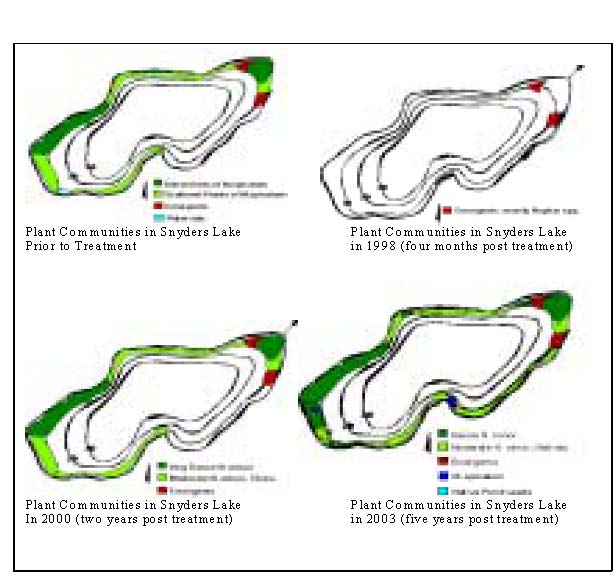
Lessons Learned: Aquatic plants appear to recover (or get re-introduced) after a long
Source: Kishbaugh, S.A. 2002. Assessment of Eurasian watermilfoil control with Sonar at Snyders Lake, NY: 1998-2001. Presentation to the NEAPMS annual conferenc
The table below indicates the susceptibility of common New York State submergent, floating, or emergent plants to these herbicides.
- • Advantages
Unlike many other in-lake management techniques, aquatic herbicides can be applied directly to the problem plants, although many of the herbicides registered in New York State are so water soluble that they do move somewhat out of the treated areas. Aquatic herbicides are available for immediate or long-term control of nuisance plants, and some of these herbicides have been shown to be somewhat selective if applied at the right time (usually very early or very late in the growing season, corresponding to when target plants, such as invasive exotic weeds, are preferentially growing) and at the right dosage rate.
Aquatic herbicides have been effective at providing at least temporary control of Eurasian watermilfoil in some New York State lakes. This pernicious exotic weed has not been consistently (or at least somewhat selectively) controlled by any of the other whole-lake treatment strategies. While generally cost-prohibitive for treatments of very large areas or very large lakes, aquatic herbicides are often less expensive than other large-scale plant control methods.
- • Disadvantages
Chemically-treated lakes may experience some significant side effects. Because herbicides kill plants primarily through toxic response, the toxicity of the herbicide to non-target plants and animals can be of great concern. Short-term impacts of aquatic herbicides have been fairly well studied for most of the inhabitants of lakes and the surrounding environment, and have been deemed to be an “acceptable risk” if applied in the appropriate manner. In general, humans and most animals have high tolerance to the toxic effects of herbicides presently approved for use in lakes. This is especially true of the newer generation herbicides that have been formulated to impact metabolic processes specific to chlorophyll-producing plants. However, the long-term impact of herbicides on humans and other plants and animals in the environment continues to be poorly studied. High herbicide dosages can elicit toxic response for the applicator and protective gear must be worn.
Non-target plants may not be resistant to the herbicide. If a wide variety of plant species are eradicated by herbicide treatment, the fast-growing ("opportunistic") exotic species that were the original target plants may recolonize the treatment area and grow to levels greater than before treatment. There are only very limited data on the effect of specific herbicides on plant species in New York State lakes. It is not clear if the target plant species listed on the herbicide labels can be completely controlled without adversely affecting non- target species at any given lake.
Impact of NYS Registered Herbicides on Common Nuisance Aquatic Plants
|
Susceptibility to Herbicide: |
|||||
|
Aquatic Plant |
Diquat |
2,4-D |
Endothal |
Glyphosate |
Fluridone |
|
Emergent Species |
|||||
|
Lythrum salicaria (purple loosestrife) |
low |
low |
low |
high |
low |
|
Phragmites spp (reed grass) |
low |
low |
medium |
high |
low |
|
Pontederia cordata (pickerelweed) |
low |
medium |
low |
medium |
low |
|
Sagittaria spp (arrowhead) |
low |
high |
low |
high |
low |
|
Scirpus spp (water bulrush) |
medium |
high |
low |
high |
low |
|
Typha spp (cattails) |
medium |
medium |
low |
high |
medium |
|
Floating Leaf Species |
|||||
|
Brasenia schreberi (water shield) |
medium |
medium |
medium |
low |
medium |
|
Lemna spp. (duckweed) |
high |
medium |
medium |
low |
high |
|
Nuphar spp (yellow water lily) |
low |
medium |
medium |
high |
medium |
|
Nymphaea spp (white water lily) |
low |
medium |
medium |
high |
medium |
|
Trapa natans (water chestnut) |
low |
medium |
low |
low |
low |
|
Submergent Species |
|||||
|
Ceratophyllum demersum (coontail) |
high |
medium |
high |
low |
high |
|
Cabomba caroliniana (fanwort) |
medium |
medium |
high |
low |
high |
|
Chara spp. (muskgrass) |
low |
low |
low |
low |
low |
|
Elodea canadensis (common waterweed) |
high |
medium |
low |
low |
high |
|
Heteranthera dubia (water stargrass) |
high |
high |
medium |
low |
medium |
|
Myriophyllum spicatum (Eurasian watermilfoil) |
high |
high |
high |
low |
high |
|
Najas flexilis (bushy pondweed) |
high |
medium |
high |
low |
medium |
|
Potamogeton amplifolius (largeleaf pondweed) |
low |
low |
medium |
low |
medium |
|
Potamogeton crispus (curly-leafed pondweed) |
high |
low |
high |
low |
high |
|
Potamogeton robbinsii (Robbins pondweed) |
low |
low |
medium |
low |
high |
|
Stuckenia pectinatus (Sago pondweed) |
high |
low |
medium |
low |
medium |
|
Utricularia spp (bladderwort) |
high |
medium |
low |
low |
high |
|
Vallisneria americanum (eelgrass) |
low |
low |
medium |
low |
medium |
*- adapted from Holdren et al., 2001 and others
When herbicides are applied in a lake environment, the affected plants drop to the bottom of the lake, die, and decompose. The resulting depletion of dissolved oxygen and release of nutrients could have detrimental ef-fects on the health or survival of fish and other aquatic life as well as stimulating new plant growth.
The effectiveness of systemic herbicides is often delayed. Given that the most effective treatment windows correspond to periods bounded by the onset of thermal stratification in the beginning of the year (to avoid treating the entire lake rather than the upper warmer waters where plants tend to grow) and by the onset of fish spawning and native plant uptake (when surface waters warm to > 50°F), plant dieoff may often not occur until early to mid summer. This means that plant control from systemic herbicides might not be “enjoyed” by lake residents until much of the recreational season has passed.
- • Costs
Herbicide costs will vary with the chemical brand and form (liquid or granular), required dose rate, applicator fees, and frequency of application. Typical costs for using herbicides are approximately $200-400 per acre of treated area per treatment, with the majority of these costs associated with the raw materials.
- • Regulatory Issues
Herbicide use in New York State requires a permit from the DEC regional environmental permits office, in compliance with the Environmental Conservation Law. If all or part of the lake contains a regulated wetland, an additional wetland permit may be required. For those lakes for which the generic Environmental Impact Statement (EIS) prepared by the manufacturers of these herbicides is deemed insufficient to address the myriad of permitting issues that might be appropriate in the lake, a site-specific EIS may be required to issue these permits. The Adirondack Park Agency will require a separate permit for herbicide use within the boundaries of the park.
Case Study- Aquatic Herbicides
Lake Setting: Waneta Lake is an 800 acre lake in the western Finger Lakes region that is part of a two-lake chain with Lamoka Lake (downstream to the south); the Waneta-Lamoka Lakes Association was formed in 1938 to address a variety of lake management issues. The lake is also a valued local fishery for largemouth- and smallmouth-bass and a secondary source for muskellunge brood stock throughout the state, and thus the lake fisheries have enjoyed a high level of protection.
The Problem: Waneta Lake has a long history of recreational use impacts associated with both nuisance algae and nuisance weed growth. The latter has been exacerbated by the introduction and spread of Eurasian watermilfoil throughout both Waneta and Lamoka Lakes since at least the mid-1980s. By the late 1990s, Eurasian watermilfoil comprised just over 50% of the biomass of aquatic plants in Waneta Lake. Mechanical weed harvesting was conducted during the mid-1980s, with funds provided through the Aquatic Vegetation Control Program (AVCP, the predecessor to the Finger Lakes-Lake Ontario Watershed Protection Alliance). This was marginally successful, but the funds for this activity dissipated ov
Response: The lake association proposed the use of fluridone to reduce the coverage and density of Eurasian watermilfoil while maintaining sufficient cover of native plants to protect the valuable fisheries resource in both Waneta and Lamoka Lakes. After much discussion and “negotiation”, the NYSDEC issued a permit for the whole-lake application of fluridone only in Waneta Lake at an initial concentration of 12-14 ppb in the summer of 2003, with provisions for a bump application as needed to restore fluridone residuals back to 6ppb within 60 days. Due to very low dilution (probably due to relatively low inflow and low photodegradation), however, fluridone residuals remained above 6ppb, without supplemental applications, for more than 60 days, and remained above 3ppb for nearly 175 days.
Performance standards were devised to evaluate herbicidal impacts to Waneta Lake and proposals for follow-up treatments in Lamoka Lake. Native and exotic plant recovery were monitored as part of an extensive survey program conducted by Cornell University, and results were evaluated by the lake consultant and NYSDEC to determine if “sufficient” recovery existed to maintain cover and refuge in the event of a downstream (Lamoka Lake) treatment. This corresponded to < 25% loss of native plant cover and overall aquatic plant biomass, and > 90% milfoil removal, within the year of treatment, and return to pre-treatment plant densities the following year.
Results: As a result of the herbicide treatment, Eurasian watermilfoil disappeared from the lake, and there was no evidence of milfoil anywhere in the lake through at least the summer of 2004. Traces of native plants were found in 54 of the 91 sites with some evidence of plant growth prior to treatment in 2003, and in 50 sites in 2004, with native plant biomass reduced to about 5% of the pre-treatment native biomass. No significant water quality changes or fisheries impacts were reported (or attributable to the herbicide treatment), and it is expected that native plant recovery will accelerate beginning in 2005, as was found in other lakes with similar initial recovery patterns. Due to delays in the plant recovery in Waneta Lake, however, large-scale treatment of Lamoka Lake was not approved. It is anticipated that the strategies used to evaluate the Waneta Lake treatment will be utilized in assessing the impacts (positive and negative) of other herbicide treatments throughout the state.
Nearly all of the aquatic herbicides registered for use in New York State carry at least one water use restriction, ranging from 24 hour restrictions on bathing to 30 day prohibition of the use of the lake water for irrigation of established row crops. These restrictions are clearly identified on the label governing the use of each of product formulations registered in New York State
Herbicide applicators must also be licensed by New York State. A list of licensed applicators is available from the NYSDEC Bureau of Pesticides in Albany. Applicators may also need to carry an insurance policy.
Permits have been issued for aquatic herbicides in nearly every part of New York StateIn fact, upwards of 500 permits are issued annually, not including purchase permits for small farm ponds. However, in some regions of the state, such as the Adirondacks no aquatic herbicide permits are being issued. The myriad of reasons include overlapping regulatory authority (the NYSDEC and the Adirondack Park Agency), strong sentiments about the use of herbicides, the presence of and concern for protecting rare and endangered species, and the lack of historical precedent in the use of many aquatic plant control strategies (due in part to the historical lack of problems with invasive plants). . A paucity of permits is also the case for lakes in other regions of the state used for potable water intake or encompassing wetland areas, since the permitting rigor is often more significant in these waterbodies. On the other hand, many lakes in the downstate region have been treated with aquatic herbicides.
Copper-based herbicides (for rooted plant control) have been registered for use in New York State, but since they can kill some fish species at the label application rate, these require extensive review and environmental assessment by the NYSDEC.
- • History and Case Studies in NYS
Aquatic herbicides have been used in New York State for many years. Federal regulation began by at least the early 1900s, although the “modern” pesticides regulations largely stem from the passage of the Federal Insecticide, Fungicide, and Rodenticide Act (FIFRA) in 1947. However, federal and state attention to pesticides, including aquatic herbicides, was significantly heightened by the publication of Silent Spring by Rachael Carson in 1962. Since then the aquatic herbicides used in lakes have been subject to more stringent testing and regulations, resulting in amendments to FIFRA starting in 1972. However, most of the lakes treated with aquatic herbicides have not been closely studied either before or after treatment. The most closely monitored lakes include Waneta Lake in Schuyler County and Snyders Lake in Rensselaer County.
Case Study- Aquatic Herbicides: Waneta Lake (cont)
Lessons Learned: The controversies over the proposedtreatment in Waneta Lake are a microcosm of the issues surrounding the use of aquatic herbicides in New York State, and it is unlikely that all parties involved will agree that the process and the results were adequate. However, the dialogue accompanyiapplication process was insightful and open, and the compromise reached by the advocates for, the opponents of, and the mediators in the permitting and evaluation process may serve as a template for future contentious aquatic plant management proposals. It is also hoped that the results from the well-designed monitoring plan will provide sorely needed answers to continuing questions about the use of aquatic herbicides in Ne
York State lakes
Sources: Lord, P.H., R.L. Johnson, and K. Wagner. 2005. Effective aquatic plant monitoring: data and issues from Waneta Lake. Present
S
Lord, P.H., R.L. Johnson and M.E. Miller. 2004. Waneta Lake 2003 and 2004 plant community structure researcsubsequent to 2003 fluridone treatment for control of
watermilfoil. Cornell University rep
ENSR International. 2001. Draft supplemental environmental impact statement for the control of Eurasianwatermilfoil in Lamoka and Waneta Lakes wit
D
- • Is That All?
Perhaps no other lake-related issue causes as much heated discussion as chemical controls. At many lake association meeting, large or small, there will likely be two factions, both convinced that the other could ruin the lake. One faction may claim that there are absolutely no conditions or situations that call for chemical treatments. The other group may insist that if herbicides are not applied immediately, weeds will take over the entire lake, destroying recreational use and slicing property values. And neither group is likely to listen to the other.
There have been few, if any, documented cases of an herbicide treatment gone completely awry. Any health problems associated with contact with herbicide-treated lakes may be perceived and based on an expected threat. While toxicological studies indicate that short-term human health effects or impacts to non-targeted organisms in the lake ecosystem are probably very small when herbicides are applied according to the permitted label, long-term monitoring of ecological or human health has not occurred. An herbicide treatment may also be ineffective due to poorly timed applications, unusual weather conditions, eradication of non- target plants, reinfestation by exotic species, or by simply using the wrong herbicide to control a particular species. Even when successful, treatments will have to be repeated at least every growing season, as is the case with nearly all symptom- based vegetation control techniques. These limitations and concerns need to be balanced against the ecological damage that may occur when invasive plants spread through a lake ecosystem, creating “biological pollution” and drastically altering the ecological balance.
Although herbicide use requires a permit in New York State, the decision whether to use chemical treatment usually rests with the lake association, residents, or lake management team. As much information as possible should be obtained about the particular species of nuisance plant, proposed herbicide, existing water chemistry conditions on the lake, and the benefits and drawbacks of using this particular herbicide on this particular lake to control this particular plant. It is important to use discretion when extrapolating information from a different lake to the conditions at your lake. Differing weather conditions, recreational uses, water chemistry characteristics, and vegetation types could yield dramatically different results from one lake to another. The DEC regional office may be able to provide some assistance in obtaining information about the lake and proposed herbicide.
- 5. Shading
- • Principle
Shading involves the use of chemical dyes to inhibit light penetration to the lake bottom, ultimately controlling the growth of nuisance aquatic vegetation in areas greater than two to four feet deep. These non- toxic vegetable dyes work by reducing light penetration in the water ("shading"), and by the absorption of wavelengths within the photosynthetically active region of light. Absorbing these wavelengths prevents the plants from photosynthesizing and growing.
The dyes treat the entire waterbody and are usually not used on large lakes due to cost limitations. Dyes are most effective in small waterbodies with little or no flow where the appropriate concentration can be maintained. .The duration for treatment for either large or small lakes is a function of water retention time. Dyes will be significantly and quickly diluted or washed downstream in lakes with inflow a
The use of shading dye is prohibited in potable water supplies; however, there are no use restrictions associated with the use of water treated with shading dye immediately after the application
The most common chemical dye used in shading is Aquashade®, an inert blue liquid vegetable dye made primarily of food colors. However, in recent years, many other products that perform the same function have been advertised as “landscaping tools”, “colorants” or to improve the “aesthetic quality” of the water, thus avoiding claims of any herbicidal impacts that require permits and compliance with regulatory restrictions outlined in FIFRA. Some of the products, particularly those registered as having herbicidal impacts, are often combined with copper formulations t
c
- •
Plants Shading dyes have been shown to be somewhat effective for several nuisance plants including Elodea (common waterweed), Potamogeton (pondweed), Najas (naiad), Myriophyllum (milfoil) and some filamentous algae. However, shading dyes are usually generalist agents. Since dyes reduce the transmission of light into a lake, all submergent plants tend to get affected by this process. Specific weed beds or sections of a lake cannot be isolated for treatment unless flow between this area and the rest
Case Study- Shading to Grass Carp: Adirondack Lake
Lake Setting: Adirondack Lake is a 200 acre lake in the town of Indian Lake in the middle of the Adirondack Park. It was formed by a stone dam originally built in 1910 (to create a recreational lake) and rebuilt by the Civilian Conservation Corps in the 1930s. The lake is characterized by a group of floating peat bogs, which have been managed by a variety of strategies over time, presently corralled by a log boom.
The Problem: Rooted aquatic plant growth has been the subject of complaints since the late 1960s to early 1970s. By the late 1970s, the aquatic plant populations in the lake were dominated by beds of large-leafed pondweed, although other native species were well represented.
The Adirondack Lake Association utilized a number of lake management tools, from water level drawdown (from 3 to 9 feet), mechanical harvesting, and aquatic herbicides (2,4-D), during the late 1970s and early 1980s.
Response and Results: In 1984, Aquashade, an inert vegetable dye, was applied at a rate of 1 part per million (500 gallons), in combination with a relatively deep lake drawdown. As a result, 90% of the aquatic plant beds (large-leaf pondweed beds comprised 95% of the biomass) were cleared from the lake for two years, with aquatic plant growth limited to shallow water by early 1986. However, by later that year, the APA estimated aquatic plant growth to be “moderate” to “abundant”. By the following year, after a deep wintdrawdown, Aquashade was applied again to control primarily laleafed pondweed beds covering 80% of the shoreline to a depth of 7feet. This resulted in a shift in the aquatic plant communities from large-leafed pondweed to brittle naiads (Najas minor) and comwaterweed (Elodea canadensis) by the following year, although, after a year of no control, the large-leafed pondweed returned to abundance.As aquatic plant growth increased, Aquashade was applied a third time in 1991, again after a (lower) winter drawdown, and a fourth timin 1994, at a total cost (for the four treatments) of about $54,000.
By 1996, the lake association shifted the agent of control from Aquashade to grass carp, in part due to the lower costs (an expected cost of $35,000 for 10 year grass carp control versus about $54,000 for 10 years of shading agents). The effectiveness of the carp have been evaluated through aquatic plant surveys conducted on the lake since 1999. It appears that the plant communities have shifted dominated by large-leaf pondweed (Potamogeton amplifolius) to a mixed community with a brittle naiad and a multitude of native milfoils and other submergent and floating-leaf plants. Overall plant coverage and densities have decreased slightly over the last several years.
Lessons Learned: It was believed that the repeated Aquashade treatments reduced plant populations in the deeper water, but had less impact in the shallow water. although the extent of the impact, and whether the shift from one dominant plant to another was acceptable, is not clear. The grass carp were generally effective at reducing the population of a plant (large-leaf pondweed) that is often considered to be a nuisance, although it is not known if the overall reduction in plant biomass adversely affected the fisheries or overall lake ecology.
Source: Grim, J. 1996. Supplement to Adirondack EAF: Environmental Impacts of Stocking Triploid Grass Carp. Unpublished report, Rhi
Kishbaugh, S. 2004. Aquatic plant survey of Adirondack Lake. Unpublished report submitted to the Hamilton County SWCD. Albany, NY.
re
• Advantages Lake dyes are non-toxic to humans and most aquatic organisms, including the invertebrate species likely to be exposed to the dye during treatment. They are relatively inexpensive for small lake and pond
pro
• Disadvantages Since the field research on the dyes has been rather sparse, it is not clear which aquatic plant species, including algae, are affected by the treatments. Some shallow water or light-insensitive plants, such as the opportunistic Eurasian watermilfoil, may actually be selected for with this technique. Since the dyes are so soluble, they tend to migrate throughout the lake, minimizing opportunities for control in selected areas of the lake. Non-targ
h
These dyes can frequently and rapidly wash out of a lake, so repeated applications may be required in lakes with very low residence times (high flushing rates) or du
o
• Costs The cost of the chemical dyes is about $50 per gallon, which is sufficient to treat four acre-feet of water at the recommended concentratio
a
• Regulatory Issues Chemical dyes require a pesticides permit from the NYSDEC and the APA if the label on the dye promotes plant control (acts as an herbicide), since the use of herbicidal agents is governed under FIFRA (see the secton on the use of Aquatic Herbicides in this chapter). For those prod
n
• History and Case Studies in NYS There is little historical information on the use of shading agents in New York State lakes, although they have been commonly used on ponds, particularly golf course and ornamental ponds, for many years. The only larg
d
• Is That All? There have been few attempts to use chemical dyes in New York State. Although chemical dyes use physical light inhibition and not toxicity as the mode of action, pesticide permits are required (from the regional DEC office and the APA) to apply the dye to a lake. The public may perceive the technique to be another herbicide with the potential of eliciting toxic reactions in non-target organisms. The dyes also impart a somewhat unnatural color to the lake water. Despite the efforts by the manufacturers to mimic the coloring of the lake environment (if not the actual wa
re
Nonetheless, this control strategy is less expensive than many other strategies, and may result in some limited success in controlling nuisance vegetation with only minor side effects. Lake associations or lake managers attempting to use chemical dyes are advised to enlist public support prior to application in lake waters used for recreational purposes. Depending on the wa
r
O
1. Plant Pathogens Plant pathogens, such as fungi, have been researched for many years, including studies looking at the impact of these pathogens on populations of Eurasian watermilfoil. However, this has not evolved into a viable plant management technique, or at least a technique that can
N
2. Surface Covers Surface covers are usually constructed from the same material as benthic barriers (opaque plastic or equivalent), and also operate as light-inhibiting agents, but they float on the water instead of being anchored on the plants. Since these frequently interfere with recreation and can
Y
3. Copper Copper is a common algacide, and is discussed in greater detail in the algae control section of this book. It may be applicable in those rare instances in which a macroalgae, such as Chara (a weakly rooted alga that superficially resembles larger aquatic plants), inhibits lake use. However, the dosage rate required to control most of these true
(
References
Baker, J.P., H. Olem, C.S. Creager, M.D. Marcus, and B.R. Parkhurst. 1993. Fish and Fisheries Management in Lakes and Reservoirs. EPA 841-R-93-002. Terrene Inst. U.S. Environ. Prot. Agency, Washington, DC.
Conesus Lake Association, 2002. The Conesus Lake dockside/near shore lake weed and algae treatment guide. Lakeville, NY.
Cooke, G.D., et al. 1993. Restoration and Management of Lakes and Reservoirs. Lewis Publishers, Boca Raton, FL.
Cooke, G. D. and R. H. Kennedy. 1989. Water quality management for reservoirs and tailwaters. Report I. In-lake reservoir water quality management techniques. Tech. Rep. E-89-I. U.S. Army Corps Eng., Vicksburg, MS.
Creed, R. 1998. A biogeographic perspective on Eurasian watermilfoil declines: Additional evidence for the role of herbivorous insects in promoting declines? J. Aquat. Plant Manage. 36: 16-22.
Crowe, G.E. and C.B. Hellquist. 2000. Aquatic and wetland plants of northeastern North America: a revised and enlarged edition of Norman C. Fassett’s A manual of aquatic plants. University of Wisconsin press.
Darrin Freshwater Institute. 1991. Hand harvesting Eurasian watermilfoil in Lake George. DFWI Rep. 91-7. Rensselaer Polytechnic Institute, Troy, NY.
Eichler, L.W. et al. 1995. Recolonization of the littoral zone by macrophytes following the removal of benthic barrier material. J Aquat Plant Manage. 33: 51-54
Engel, S. 1984. Evaluating stationary blankets and removable screens for macrophyte control in lakes. J. Aquat. Plant Manage. 22:43-48.
Holdren, C., W. Jones, and J. Taggart. 2001. Managing Lakes and Reservoirs. N. Am. Lake Manage. Soc. and Terrene Inst., in coop. With Off. Water Assess. Watershed Prot. Div. U.S. Environ. Prot. Agency, Madison, WI.
Johnson, R. 2002. Personal communications. Ithaca, NY.
Lord, P.H., R. L. Johnson and K.Wagner. 2005. Effective aquatic plant monitoring: data and issues from Waneta Lake. Presentation at the Northeast Aquatic Plant Management Society annual meeting, Saratoga Springs, NY
McComas, S. 1993. Lake Smarts: The First Lake Management Handbook. Terrene Inst., U.S. Environ. Prot. Agency, Washington D.C.
Newroth, P. and R. Soar. 1986. Eurasian watermilfoil management using newly developed technologies. Lake Reserv. Manage. 2: 252-57
NYSDEC, 2002. New York State Water Quality 2002. Albany, NY.
Perkins, M.A., H.L. Boston, and E.F. Curren. 1980. The use of fiberglass screens for control of Eurasian watermilfoil. J. Aquat. Plant Manage. 18:13-19
Sheldon, S. and L. O’Bryan. 1996. The life history of the weevil, Euhrychiopsis lecontei, a potential biological control agent of Eurasian watermilfoil. Entomolog. News 107: 16-22.
Solarz, S. and R. Newman. 1996. Oviposition specificity and behavior of the watermilfoil specialist Euhrychiopsis lecontei. Oecologia 106: 337-44.
Westerdahl, H.E. and K.D. Getsinger, eds. 1998. Aquatic plant identification and herbicide use guide. Vol. 2. Aquatic plants and susceptibility to herbicides. Waterways Experiment Station. U.S. Army Corps Eng., Vicksburg, MS.
Definitions
Emergent plants grow primarily above the water surface, although the plant may be rooted in the water. Cattails, purple loosestrife, and phragmites are examples of emergent plants
Exotic species- not native to a lake, and usually not native to a larger geographic region (the Adirondacks, New York, North America….), at the time of European settlement. Usually refers to plants or animals accidentally or purposefully introduced to an area outside of its historic range. Also referred to as non-native, alien, or introduced species.
Floating plants may or may not be rooted underwater, but the majority of the plant is associated with a floating leaf. Water lilies, watershield, duckweed, and watermeal are examples of floating plants
Invasive Species- plants or animals that rapidly reproduce and displace native species. Also referred to as noxious species.
Macrophytes- large plants (macro meaning large, and phyte meaning plant)- most of the aquatic plants found in New York State can be referred to as macrophytes
Meristems- the growing tips of aquatic plants- these are preyed on by herbivorous insects, and are often the most conspicuous part of an underwater plant
Monoculture- a single, homogeneous culture without diversity, such as a plant bed comprised solely of a single aquatic plant
Native Species- native or indigenous to a region at the time of European settlement
Naturalized- introduced from another region and persisting without cultivation; for example, aquatic plants or animals that might not be truly native but were long ago introduced and have adapted to a lake environment
Nuisance Species- plants or animals interferes with human activities. Also referred to as weeds.
Submergent plants grow primarily underwater, although small floating leaves or fruiting structures may sit on or above the lake surface. Water milfoil, pondweeds, coontail, and bladderwort are examples of submergent plants.
Veligers- a larval stage of a mollusk, such as a zebra mussel
Appendix A: Elements of an Aquatic Plant Management Plan
- • Problem Statement
- o Map(s) Indicating Areas of Plant Growth
- o Identification of Aquatic Plants on the Map, Including Invasive/Target Species (indicate how target species identification was verified- professional? Applicator? Part of monitoring program?….)
- o History of Invasive Weed Growth- include year of introduction if known, indicate if invasive weed populations are increasing, stable, or decreasing
- o Uses Impaired- identify only major uses affected by weeds and whether these are designated lake uses, including impact of target plants/ exotics on native plants and lake ecology (aquatic life impacts)
- o Known Occurrences of Rare/Endangered Species of Concern?- list (reference NYS Protected Plant list as needed)
- • Management History
- o Description of Previous Management Efforts (one paragraph per control strategy used).
- o Evaluation of Successes and Failures- did previous management successfully control problem?
- o Lessons Learned- did it work?, use of specific control methods, whether limitations existing on the use of particular techniques at this lake
- o Does Overall Lake Management Plan Exist? (does it address plant control?)
- o Context of Aquatic Plant Management versus other lake management objectives (is aquatic plant control compatible with other lake management objectives, such as swimming, potable water intake, irrigation water, etc.?)
- o Description of Public Involvement in Management Efforts- Lake Association? Local Government? Adoption of Prior Management Plans?
- • Management Objectives
- o Extent of Preferred Management- summarize in one paragraph
- • Partial vs. whole lake management
- • Seasonal (short-term) vs. year-round
- • Immediate vs. long-term or persistent
- • Selective control vs. removing all plants in targeted area
- o Expected Use Benefits- one paragraph summary
- o Critical Areas to Protect (re: fisheries, wetlands, water intake)
- • Management Alternatives- include information on “practical” use of these alternatives at this lake (what factors affect choice of preferred management alternatives- including bathymetry, flushing rate, outflow/groundwater seepage)- In other words, identify why each management alternative is (or is not) appropriate
- o Local Control- hand harvesting, benthic mats, herbicides- one paragraph for all methods
- o Lakewide Control
- • Physical/Mechanical control- drawdown, mechanical harvesting, shading- one paragraph for all methods
- • Biological control- grass carp, herbivorous insects- one paragraph for all methods
- • Chemical control- herbicides- one paragraph for all methods
- o No Action Alternative- one paragraph summary
- o Preferred Alternative(s)- one paragraph summary
- o Integrated Management- one paragraph summary of whether integrated approach (multiple techniques) is appropriate
- • Pre-, During- and Post Treatment Actions Planned
- o Monitoring-
- • Aquatic plant- describe on-going and future monitoring to support aquatic plant management plan
- • Method (rake toss? point intercept? transects?)
- • Frequency of monitoring? (monthly, annually,…?)
- • Conducted by? (professional or volunteer)?
- • Results reported by maps? Data tables? Presence/absence?
- • Water Quality- describe on-going and future monitoring to support aquatic plant management plan
- • Water clarity and/or chlorophyll to evaluate shift from macrophyte-dominated to algae-dominated?
- • Dissolved oxygen measurements to evaluate potential for fish kills during and after treatment?
- • Frequency of monitoring?
- • Professional or volunteer?
- o Early Response- describe planned activities- one paragraph each:
- • Hand pulling or benthic mats as individual plants or small beds of reinfested target species
- • Frequency/schedule?
- • Prompted by?
- o Identifications through monitoring program?
- o Reports from lake residents?
- • Educational program re: exotics and vectors of transport
- o Source Management- describe planned activities- one paragraph
- • Signage/pamphlets at local launches
- • Boat/prop inspections
- • Strategies for reducing sediment/fertilizer load to lake (list and brief description of proposed strategies)- if not, indicate why this would not be efficient use of resources/effort (not contributing to invasive plant problem, etc)- will the lake resident try to identify sources of pollutants to the lake and start to address this loading
- o Evaluation of Efficacy (Did it work?)- brief (one paragraph summary)- timeframes; will this information will be reported to the DEC?
- • Did it control the target plants?
- • Will fisheries impacts be evaluated and how?
- • User surveys planned? (did people think it was successful)